
Tennis Elbow Treatment Southampton

Tennis Elbow Treatment in Southampton
Written by Ian Greaves, MOst, Registered Osteopath (GOsC 11228), iO 106967
That first sharp stab on the outside of your elbow when you lift a cup of tea. The dull ache that builds through the day at your desk, then catches you hard when you turn a door handle or shake someone’s hand.
Tennis elbow — clinically termed lateral epicondylalgia — is a tendinopathy affecting the common extensor tendon where it attaches to the outer elbow. The condition involves degenerative changes within the extensor carpi radialis brevis (ECRB) tendon, characterised by disorganised collagen, increased vascularity, and neural ingrowth rather than acute inflammation. Despite the name, tennis players represent only around 5% of cases — most people we see at Southampton Physio developed tennis elbow through work activities, DIY, climbing, or simply gradual overload through everyday tasks. The dominant arm is affected in around 75% of cases, and current evidence shows that progressive exercise therapy provides better long-term outcomes than injections or passive rest.
Is This What You're Feeling?
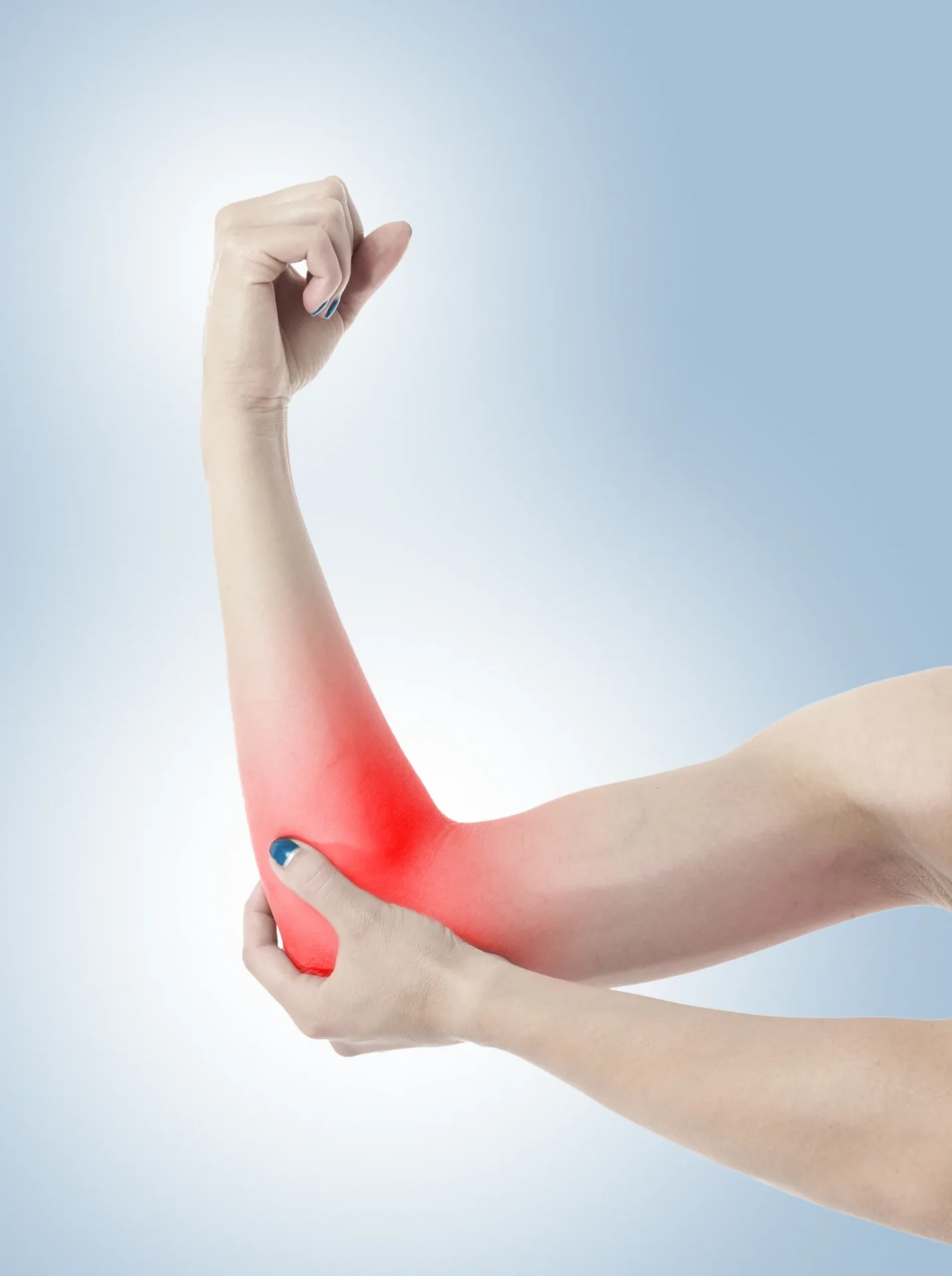
The hallmark symptom is pain on the outer side of your elbow, often spreading down into your forearm. You might notice it’s worst when gripping — lifting a kettle, carrying shopping bags, using a screwdriver, or gripping a mouse for long periods. Shaking hands can be unexpectedly painful. Many people describe a tender spot on the bony prominence on the outside of the elbow that’s sensitive to direct pressure. The pain often starts subtly and builds over weeks or months rather than appearing suddenly. You might find that after a period of rest — overnight or after a weekend — the elbow feels better, but the pain returns quickly once you resume normal activities. Weakness is common; you may struggle to grip firmly or notice you’re dropping things more often than usual.
Why Is This Happening?
Tennis elbow develops when the tendon that controls wrist and finger extension is overloaded beyond its current capacity to adapt. This tendon acts like a cable — it needs progressive load to strengthen, but too much too soon, or sustained load without adequate recovery, overwhelms it. The condition involves disorganised collagen structure, increased pain-sensitive nerve fibres growing into the tendon, and failed healing responses to repetitive microtrauma, rather than ongoing inflammation — Buchbinder et al. (2008), BMJ Clinical Evidence.
Tendon overload can occur acutely — a sudden spike in activity like a weekend of heavy DIY or an intense climbing session — but more commonly it builds gradually. Desk workers who spend hours gripping a mouse, manual workers using vibrating tools, climbers loading fingers and wrists repetitively, or anyone who’s recently increased their training load without adequate progression are at higher risk. The issue isn’t just what you’re doing with your hand and wrist; how your shoulder, scapula, and upper back function upstream plays a significant role. Poor shoulder blade control or weakness in the rotator cuff can shift more load down to the elbow and forearm.
The most important principle in rehabilitation is load management: reducing provocative load initially while progressively loading the tendon to improve its capacity. We’re not trying to “fix” a broken structure; we’re teaching the tendon to tolerate the demands you’re placing on it.
How Southampton Physio Treats Tennis Elbow
Your First Assessment
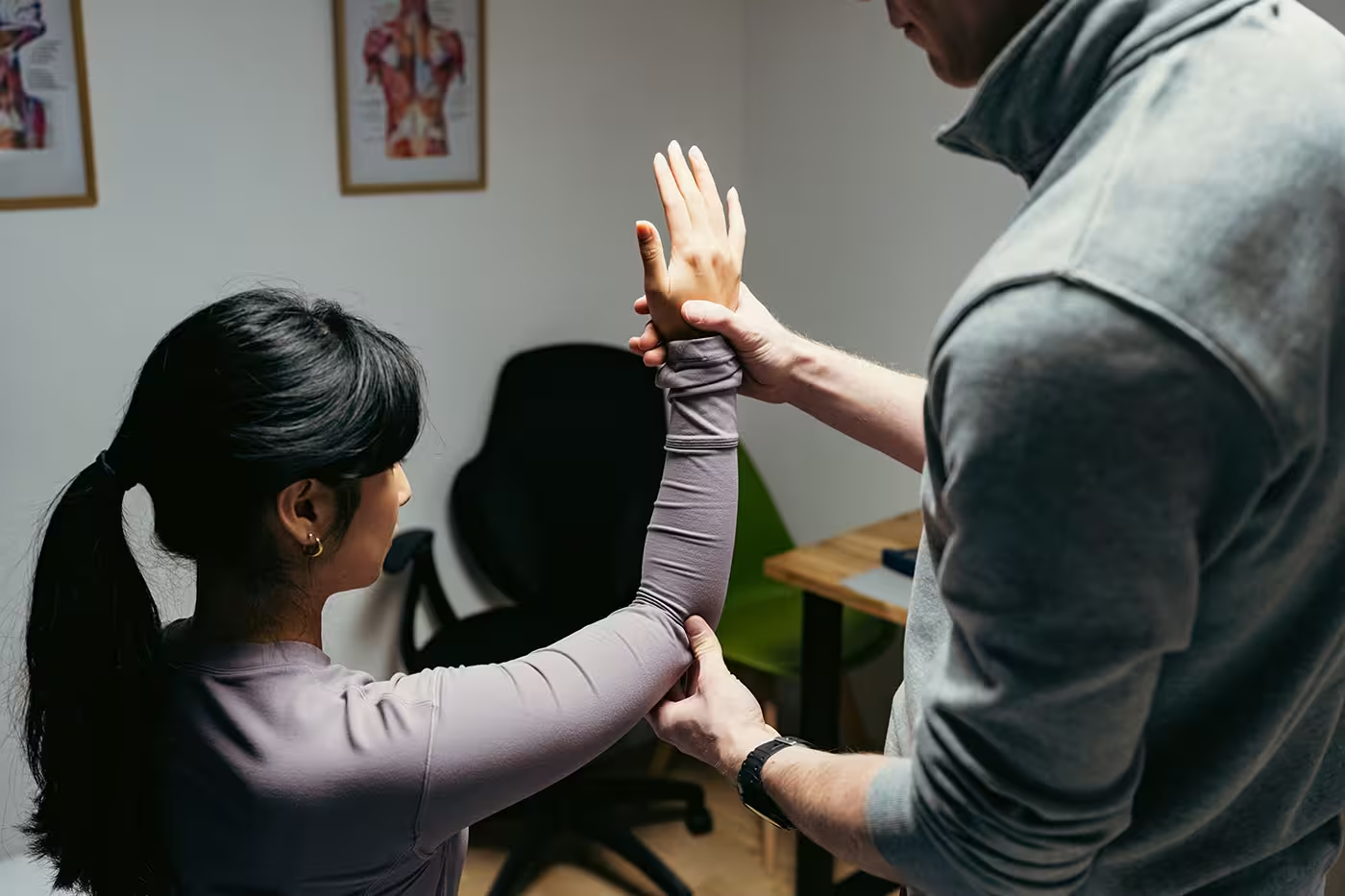
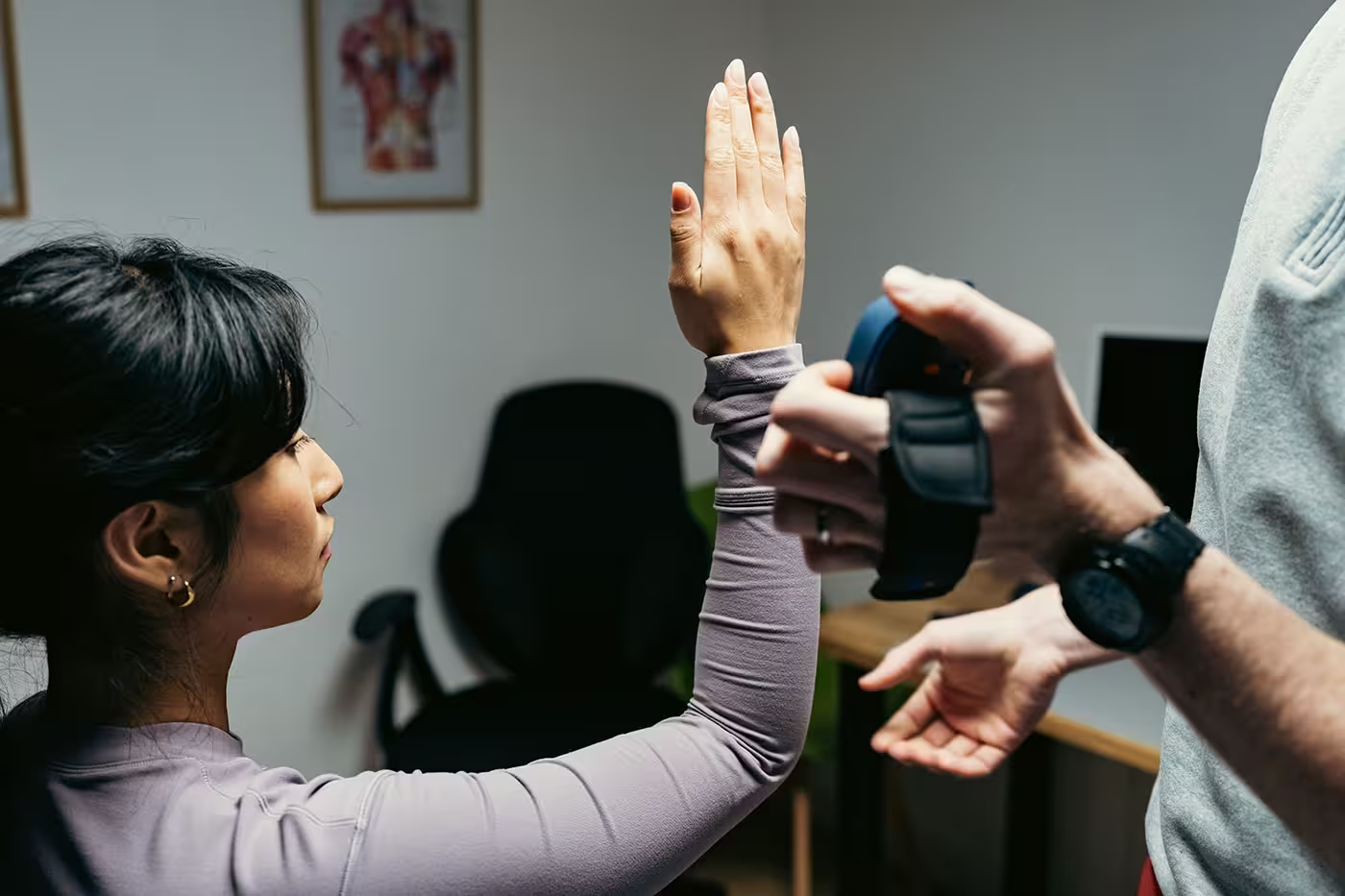
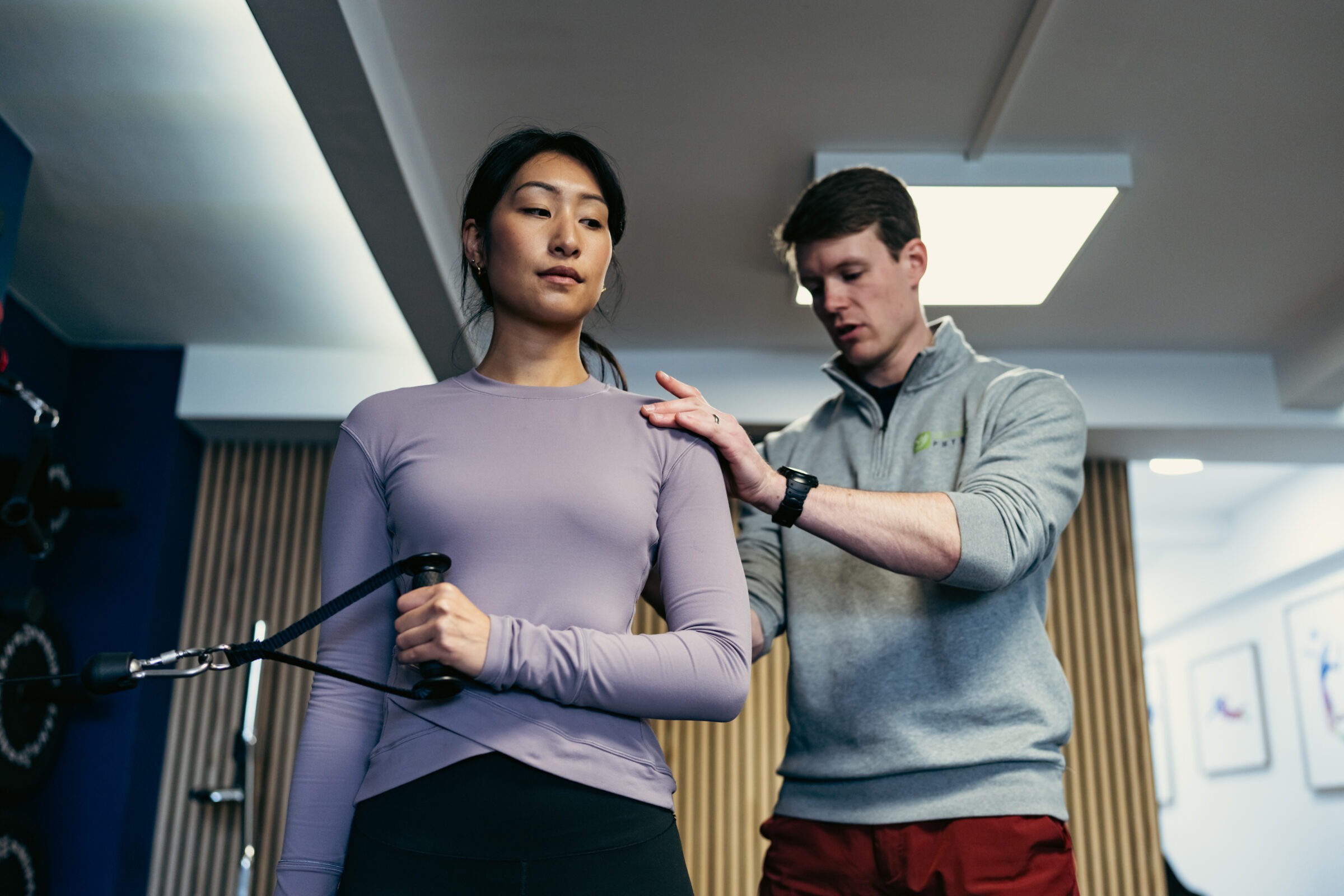
We identify the specific load patterns that have overwhelmed your tendon and assess how movement upstream — your shoulder, scapula, and neck — might be contributing. Your first session includes a detailed movement assessment, strength testing, and a clear explanation of what’s happening and why. You’ll leave with a tailored exercise plan, advice on modifying activities that are aggravating your symptoms, and realistic expectations about timelines. Most people see meaningful improvement within 6–12 weeks, though up to 80% improve within 12 months with appropriate management — Bateman & Titchener (2018), British Journal of General Practice.
Hands-On Treatment
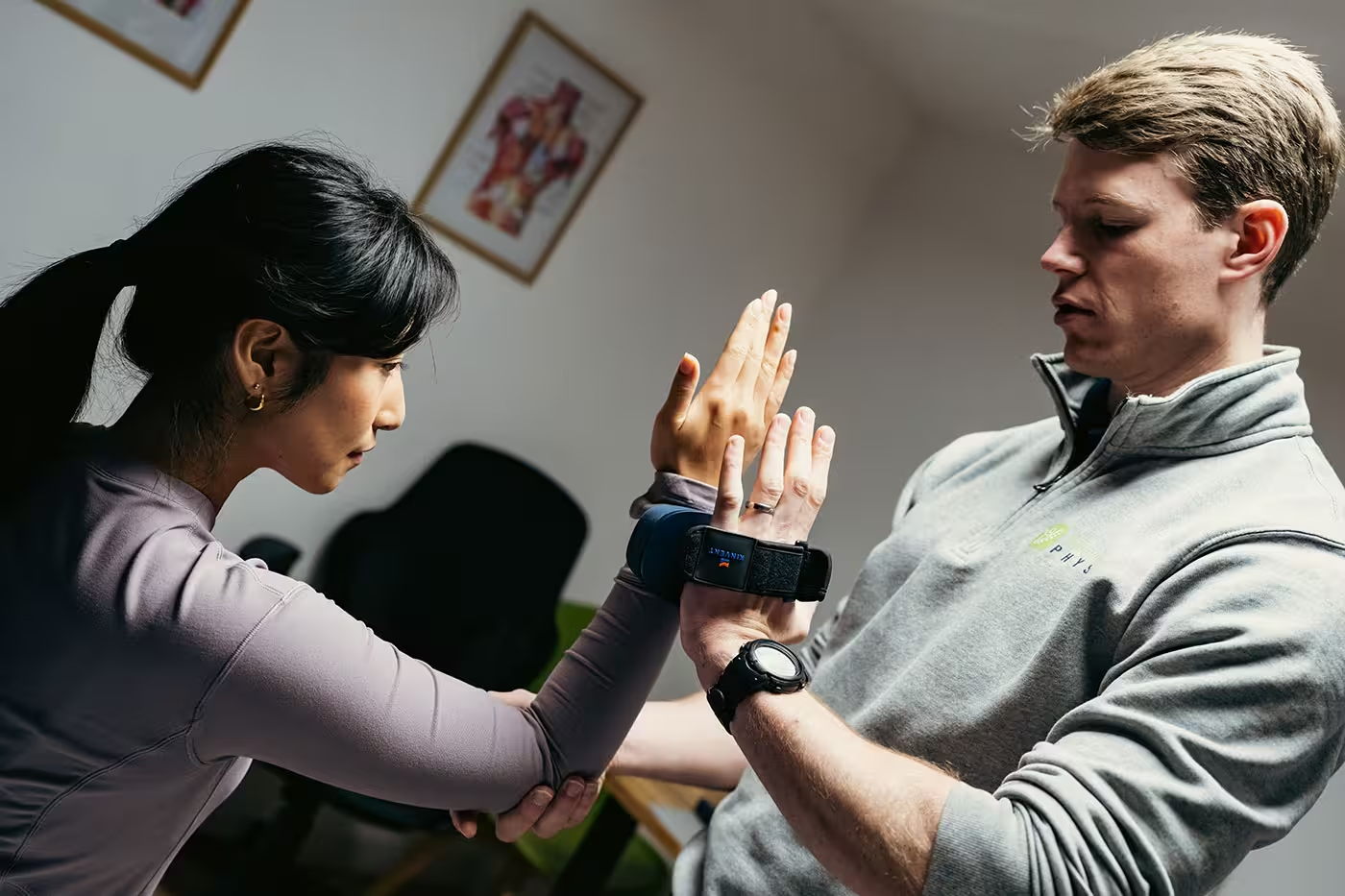
Manual therapy can help reduce pain and prepare the tendon for progressive loading. We use soft tissue work to reduce muscle tension in the forearm, joint mobilisation to improve elbow and wrist mobility, and sometimes techniques to settle nerve sensitivity if that’s contributing. However, hands-on treatment is an adjunct — it helps with symptom relief and creates a better environment for exercise, but it won’t resolve the issue on its own.
For cases that haven’t responded to first-line treatment after three months, we may discuss shockwave therapy as a second-line option. High-energy extracorporeal shockwave therapy (ESWT) shows benefits sustained at 3–6 months in systematic reviews of randomised controlled trials, and is endorsed by NICE guidance (HTG201) for refractory tennis elbow.
Building Long-Term Strength
Exercise is the foundation of recovery. Current evidence — including the 2023 British Elbow & Shoulder Society (BESS) clinical practice guidelines — identifies progressive loading exercise as first-line treatment, with strong evidence (Level 1a) supporting its superiority over passive treatments. A randomised controlled trial by Peterson et al. (2011), published in PLOS ONE, found that exercise was superior to a wait-and-see approach for reducing pain, with sustained benefits at one-year follow-up.
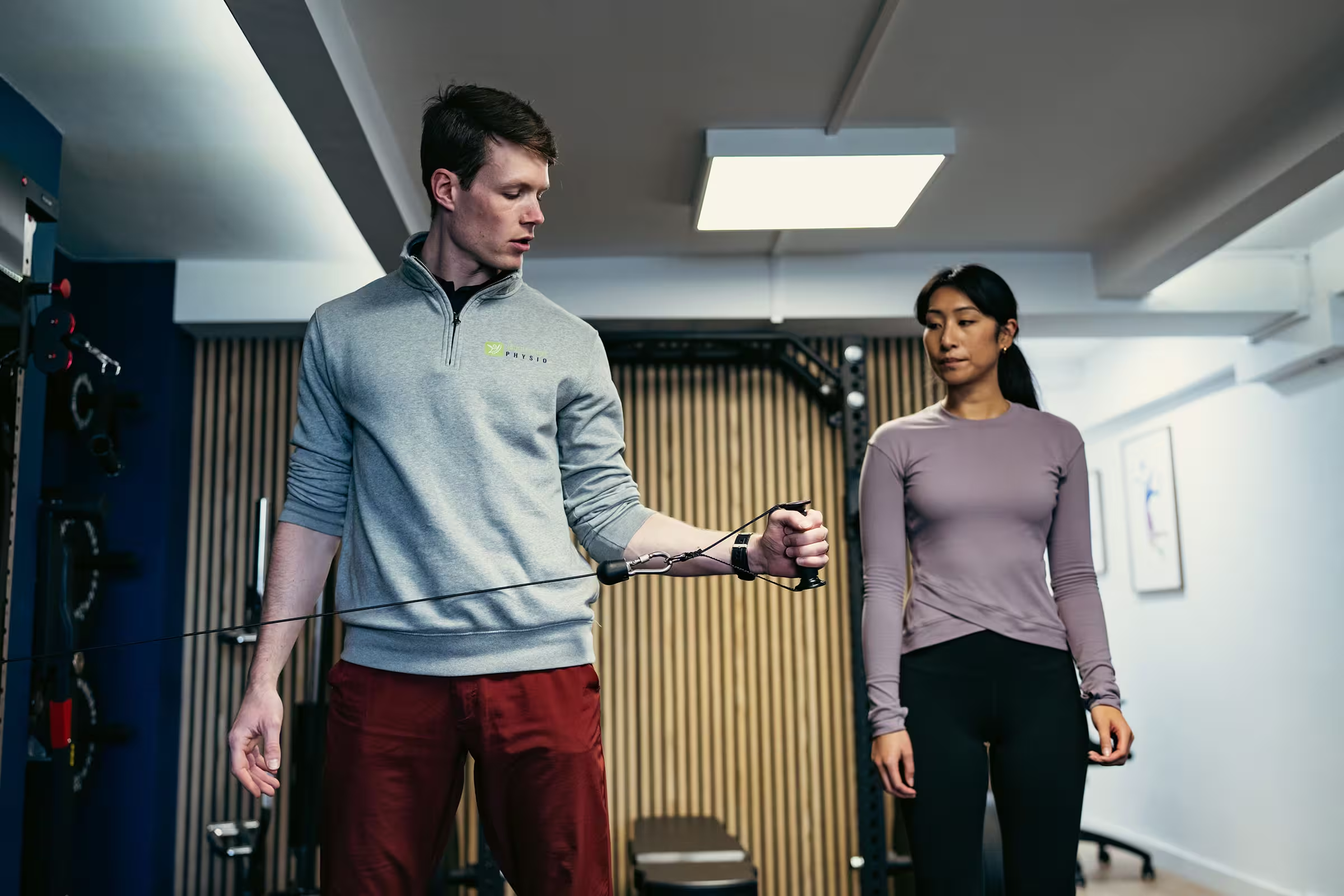
Your programme will include eccentric strengthening exercises — controlled lowering movements that build tendon tolerance — and progressive loading tailored to your specific demands. A meta-analysis of 429 participants (Yoon et al., 2021) found significant improvement in pain scores and muscle strength with eccentric exercise. We’ll progress you from isolated wrist and forearm exercises to integrated movements that prepare you for work, sport, or daily tasks. Importantly, we address the full kinetic chain — shoulder blade control, rotator cuff strength, and upper back mobility — because recurring or persistent presentations often require looking upstream to offload the tendon by improving function at the shoulder and scapulothoracic junction.
For some people, especially those who’ve tried multiple treatments without lasting results or who have complex, recurring patterns, we offer a more comprehensive pathway through our Clinical Personal Training programme that integrates our full team over 12–16 weeks. This is designed for persistent or complex issues that need a deeper root-cause approach and long-term strength building.
What You Can Start Doing Today
Modify your grip activities. If typing or mouse work aggravates symptoms, adjust your workstation so your wrist stays in a neutral position — keyboard and mouse at elbow height, forearms supported. Take short breaks every 20–30 minutes to move your neck, shoulders, and wrists through their range.
Start gentle loading. If gripping a light weight (500g–1kg) or a resistance band doesn’t provoke sharp pain, begin with slow, controlled wrist extension exercises: rest your forearm on a table with your hand hanging off the edge, palm down, and slowly lift and lower the weight through your wrist. Start with 2 sets of 10–12 repetitions once daily. The aim is to feel the muscle working, not to provoke significant pain.
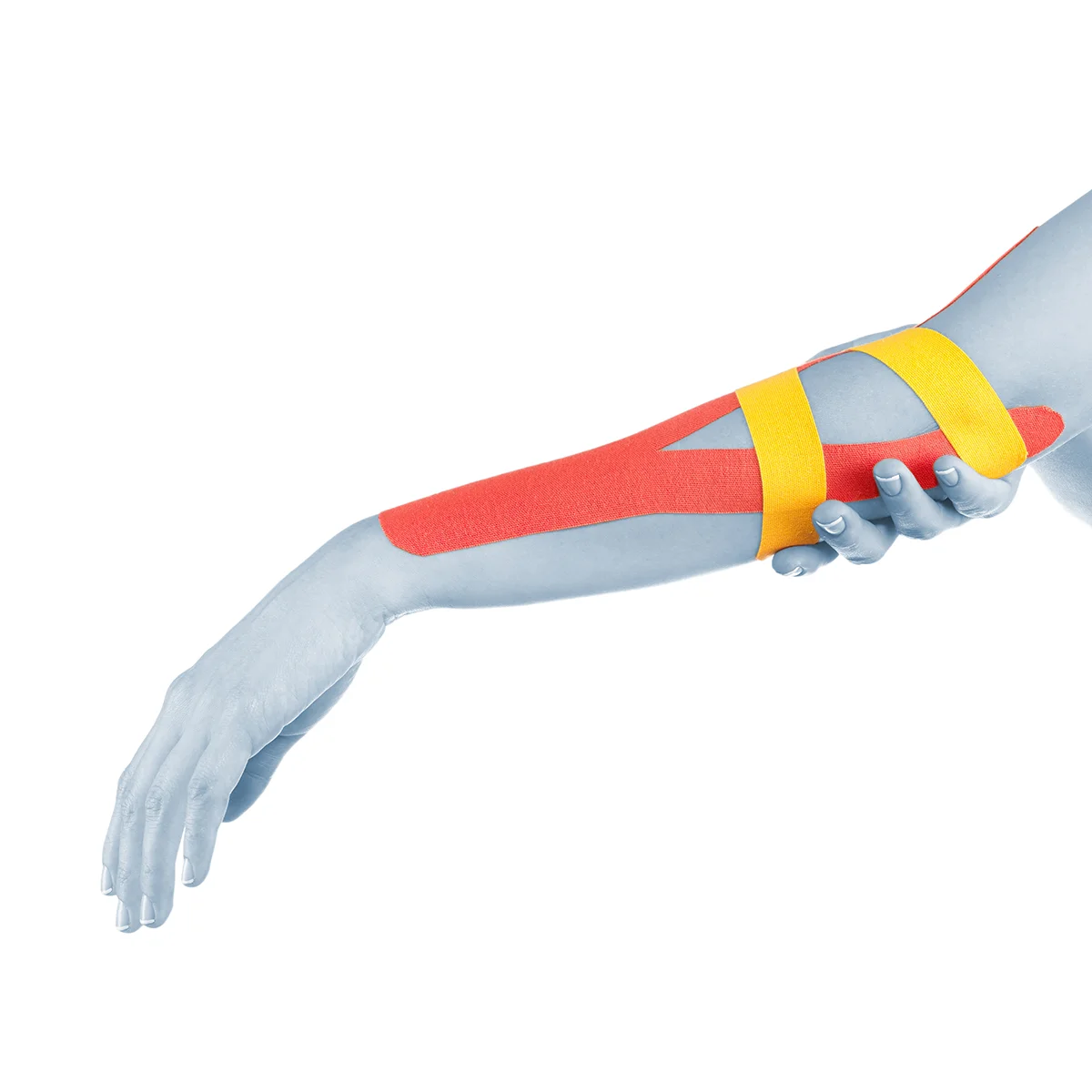
Use a tennis elbow brace if needed. An orthotic brace worn just below the elbow can provide immediate symptom relief during grip tasks by redistributing load away from the tendon — a randomised controlled trial found immediate pain reduction during use. However, it provides no long-term structural benefit and should be viewed as a temporary aid while you build strength, not a solution.
Why Choose Southampton Physio for Tennis Elbow?
We see a high volume of tennis elbow cases, particularly among climbers, manual workers, and desk-based professionals, through our Climbing Injury Clinic and general physiotherapy service at our Bedford Place clinic. Our approach integrates the latest clinical guidelines — including the 2023 BESS pathway and NICE recommendations — with a practical understanding of load management and the need to address the full kinetic chain, not just the symptomatic elbow.
We don’t rely on passive treatments or injections. A landmark study by Coombes et al. (2013), published in JAMA, found that one-year recurrence was markedly higher after corticosteroid injection (54%) than after placebo injection (12%), and that the group treated with physiotherapy alone had the lowest recurrence of all (around 5%) with complete recovery in nearly everyone at one year.
The 2023 BESS guidelines now explicitly advise against corticosteroid injections (Level 1a evidence, strong recommendation, 95% agreement), noting that short-term benefit is offset by high recurrence and delayed long-term recovery. Our focus is on rebuilding your tendon’s capacity through structured, progressive exercise.
Our team includes physiotherapists, osteopaths, and sports therapists who understand the biomechanics of the shoulder, elbow, and wrist, and how they interact. For complex or persistent cases, we can integrate sports massage, shockwave therapy, and long-term strength and conditioning through our Clinical Personal Training pathway.
“The team at Southampton Physio were great. I went there with a classic case of ‘Golfers/Climbers’ elbow. Ian and the team were able to diagnose, massage, and recommend an exercise plan that didn’t interrupt my bouldering hobby, but would get me back on track. Friendly, professional and understanding.” — Christopher Wilkes
Frequently Asked Questions About Tennis Elbow in Southampton
What will a physiotherapist do for tennis elbow?
A physiotherapist will assess your movement patterns, strength, and load tolerance, then design a progressive exercise programme tailored to your work and activity demands. We use manual therapy to reduce pain and improve mobility, provide education on load management, and guide you through a structured rehabilitation plan over 6–12 weeks. Exercise therapy is first-line treatment with the strongest evidence.
How long does tennis elbow take to heal?
Most people see meaningful improvement within 6–12 weeks with appropriate exercise therapy. Research shows up to 80% of cases improve within 12 months — Bateman & Titchener (2018). However, approximately 17% of patients still have symptoms after one year — Peterson et al. (2011) — particularly those with poor initial response to exercise. Early intervention and consistent progressive loading improve outcomes and reduce the risk of chronicity.
What is the fastest way to cure tennis elbow?
There is no quick fix. The fastest route to recovery is consistent, progressive loading exercise guided by a physiotherapist, combined with intelligent load management — modifying activities that aggravate symptoms while maintaining movement. Rest alone is not effective; exercise has been shown to be superior to a wait-and-see approach. Corticosteroid injections may provide short-term relief but carry a markedly higher one-year recurrence rate than conservative care — Coombes et al. (2013), JAMA.
What should you not do with tennis elbow?
Avoid complete rest — tendons need load to heal, and prolonged inactivity weakens them further. Avoid relying on corticosteroid injections as a primary treatment; current guidelines advise against them due to high recurrence and delayed recovery. Don’t ignore pain that’s getting worse or spreading — if symptoms aren’t improving after 6–8 weeks of appropriate self-management, seek assessment.
Which therapy is best for tennis elbow?
Progressive loading exercise therapy is the gold standard, endorsed as first-line treatment by the 2023 BESS guidelines with Level 1a evidence. Physiotherapy focusing on eccentric strengthening and functional rehabilitation has the strongest evidence base. For cases that don’t respond after three months, high-energy shockwave therapy is a second-line option supported by NICE guidance. Platelet-rich plasma (PRP) and autologous blood injections have insufficient evidence for routine use.
Do I need a scan for tennis elbow?
Most cases are diagnosed clinically without imaging. If symptoms haven’t responded to 6–8 weeks of appropriate conservative management, or if there’s diagnostic uncertainty, ultrasound or MRI may be used to confirm the diagnosis and exclude partial or full-thickness tendon tears. Imaging isn’t needed for straightforward presentations.
How many physiotherapy sessions will I need?
Typical treatment involves 4–6 sessions over 8–12 weeks, though this varies depending on severity, your response to exercise, and how well you can self-manage between sessions. Some people need only 2–3 sessions to understand their programme and check progress; others with complex or persistent symptoms benefit from longer-term support.
Can I still exercise with tennis elbow?
Yes, but you need to modify your activities. Avoid movements that cause sharp pain or significant symptom flare-ups lasting more than 24 hours. Low-level discomfort during exercise is acceptable and often part of the rehabilitation process. Activities that don’t load the wrist extensors — lower body strength work, cycling, walking — can continue. Your physiotherapist will guide you on safe progression.
When should I see a physiotherapist for tennis elbow?
Seek assessment if symptoms haven’t improved after 2–3 weeks of modifying your activities, if pain is affecting your work or daily function, or if you’ve had recurring elbow pain in the past. Early intervention improves outcomes. Seek urgent medical attention if you experience neurological symptoms — weakness, numbness, or pins and needles in a clear nerve distribution — or if pain follows acute trauma.
What about injections or surgery?
Corticosteroid injections are not recommended based on current evidence — they show a markedly higher one-year recurrence rate than conservative care (Coombes et al., 2013, JAMA). Platelet-rich plasma (PRP) has insufficient evidence for routine use, and autologous blood injections are not supported by Cochrane reviews. Surgery is considered only for cases that fail to improve after 12 months of conservative management and second-line treatments like shockwave therapy; outcomes are variable and it’s not a guaranteed solution.
When Should You Seek Help?
Most tennis elbow cases respond well to structured rehabilitation, but certain signs require urgent assessment. Seek immediate medical attention if you experience acute trauma with sudden onset of pain — this may indicate a fracture or ligamentous injury. Neurological signs such as weakness, numbness, or pins and needles in a clear dermatomal distribution suggest cervical radiculopathy or peripheral nerve entrapment and require specialist referral. Systemic features — fever, unexplained weight loss, night sweats, or bilateral joint involvement — warrant urgent investigation to exclude inflammatory arthropathy, infection, or malignancy.
If you’ve been managing symptoms for 6–8 weeks without improvement despite modifying activities and attempting self-directed exercises, it’s time for a formal assessment. Imaging may be needed to confirm the diagnosis and rule out partial or full-thickness tendon tears, particularly if symptoms are worsening or you’ve had multiple failed treatment attempts.
Booking
Ready to Get Moving Again?
Tennis elbow is frustrating, but it’s not a permanent condition. With the right approach — progressive loading tailored to your demands, intelligent load management, and addressing how your shoulder and upper back function — most people regain full pain-free function. Current evidence strongly supports exercise therapy as first-line treatment, and we have the clinical expertise and team integration to guide you through that process at our Bedford Place clinic.
You don’t need to keep working around the pain, avoiding activities you enjoy, or relying on temporary fixes. Let’s get you booked in for an assessment, identify what’s driving your symptoms, and build a clear plan to get your elbow strong and resilient again.
Our clinic: Southampton Physio, 35 Bedford Place, Southampton, SO15 2DG. Call us on 023 8110 2077 or book online.
Written by Ian Greaves, MOst, Registered Osteopath (GOsC 11228), iO 106967