
Climbing Injury Clinic in Southampton

Recover, Climb Stronger and Stay Injury-Free
That sharp twinge in your finger when you crimp on a hold. The shoulder that aches just enough after a session that you wonder if you should have stopped earlier. The elbow pain that’s been niggling for weeks but isn’t quite bad enough to make you stop climbing — until suddenly it is.
Climbing isn’t just a sport — it’s a passion, a lifestyle, and for many climbers in Southampton, a vital outlet. Injuries get in the way, making every move feel uncertain and keeping you off the wall longer than you’d like. Our Climbing Injury Clinic exists to fix that — not just to get you pain-free, but to address why the injury happened, improve how you move, and build the strength to climb harder and more sustainably.
We run the clinic in partnership with Oli Cheshire of High Life Climbing, so your rehab doesn’t stop at recovery — it includes climbing-specific coaching to get you climbing better than before.
Is This What You're Feeling?
You might be dealing with a climbing injury if you recognise any of these:
- Sharp pain in a finger when gripping or crimping, often worse on small holds or when pulling hard. You might notice swelling at the base of the finger or weakness when gripping.
- Shoulder pain during or after climbing, especially when reaching overhead, pulling through on steep routes, or the day after a session. Often felt at the front of the shoulder or deep inside the joint.
- Elbow pain on the inside or outside of the joint, aggravated by gripping, pulling, or even typing. A deep ache or sharp catch when you load the arm.
- Wrist pain when loading in certain positions, particularly on slopers or when mantling. Clicking, catching, or a deep ache that doesn't settle.
- Pain that returns every time you go back to climbing after a rest period, even if you felt fine during the break.
These are the patterns we see most often in climbers at our Southampton clinic. If they sound familiar, you’re not imagining it — and you’re not alone.
Why Climbing Injuries Happen
exceeds their current capacity. This isn’t about weakness or poor technique in isolation — it’s about the combination of volume, intensity, and recovery.
Research on climbing populations reports an injury rate of approximately 4.2 injuries per 1,000 climbing hours, with overuse injuries accounting for up to 93% of all reported injuries (Schöffl et al., 2009; see also systematic review, Frontiers in Sports and Active Living, 2023). Around half of climbers report at least one injury in any 12-month period. The upper extremity is where most of these happen — fingers, shoulders, and elbows — because that’s where climbing loads concentrate.
The common patterns we treat:
- Finger pulley injuries — typically A2 strains or partial tears, usually from high-force crimping after a training jump or returning from a break. The pulley is a band of connective tissue that holds the flexor tendon close to the bone; when load exceeds its tolerance, you get pain, swelling, and sometimes a pop.
- Shoulder pain — often from repetitive overhead loading without enough rotator cuff or scapular endurance to match your climbing volume. Steep terrain, lock-offs, and high-volume bouldering sessions all drive this.
- Climber's elbow — medial or lateral elbow tendinopathy from sustained gripping. Tendons need progressive load to strengthen; when volume rises faster than the tendon can adapt, you get irritation that builds over weeks.
- Knee and ankle injuries — typically from high-stepping, heel hooking, or bad landings.
Adolescent climbers carry particular risk because progression often outpaces tissue adaptation, especially during growth periods. We treat these conservatively where possible — surgery is rarely the first option.
What to Expect at the Climbing Injury Clinic
1. Comprehensive Assessment
- In-depth injury analysis — we assess how your climbing style, movement patterns, and training habits contribute to your injury.
- Climbing-specific movement screening — identifying mobility, strength, and technique deficits that put you at risk.
- Grip strength testing for finger injuries, using dynamometry to measure deficits and guide return-to-climbing decisions.
- Video analysis where needed — breaking down movement patterns to spot inefficiencies that drive injury.
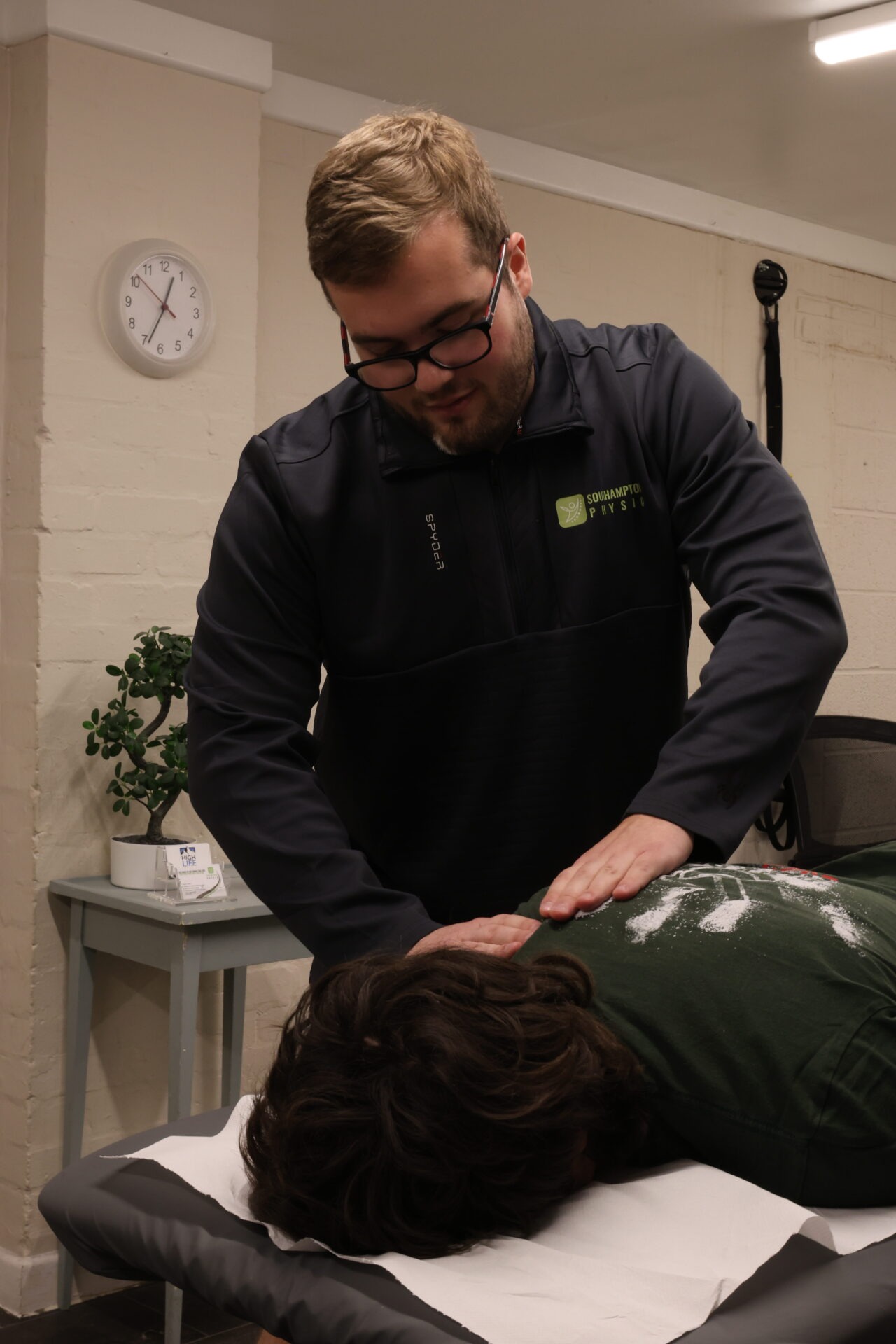
2. Hands-On Treatment and Pain Relief
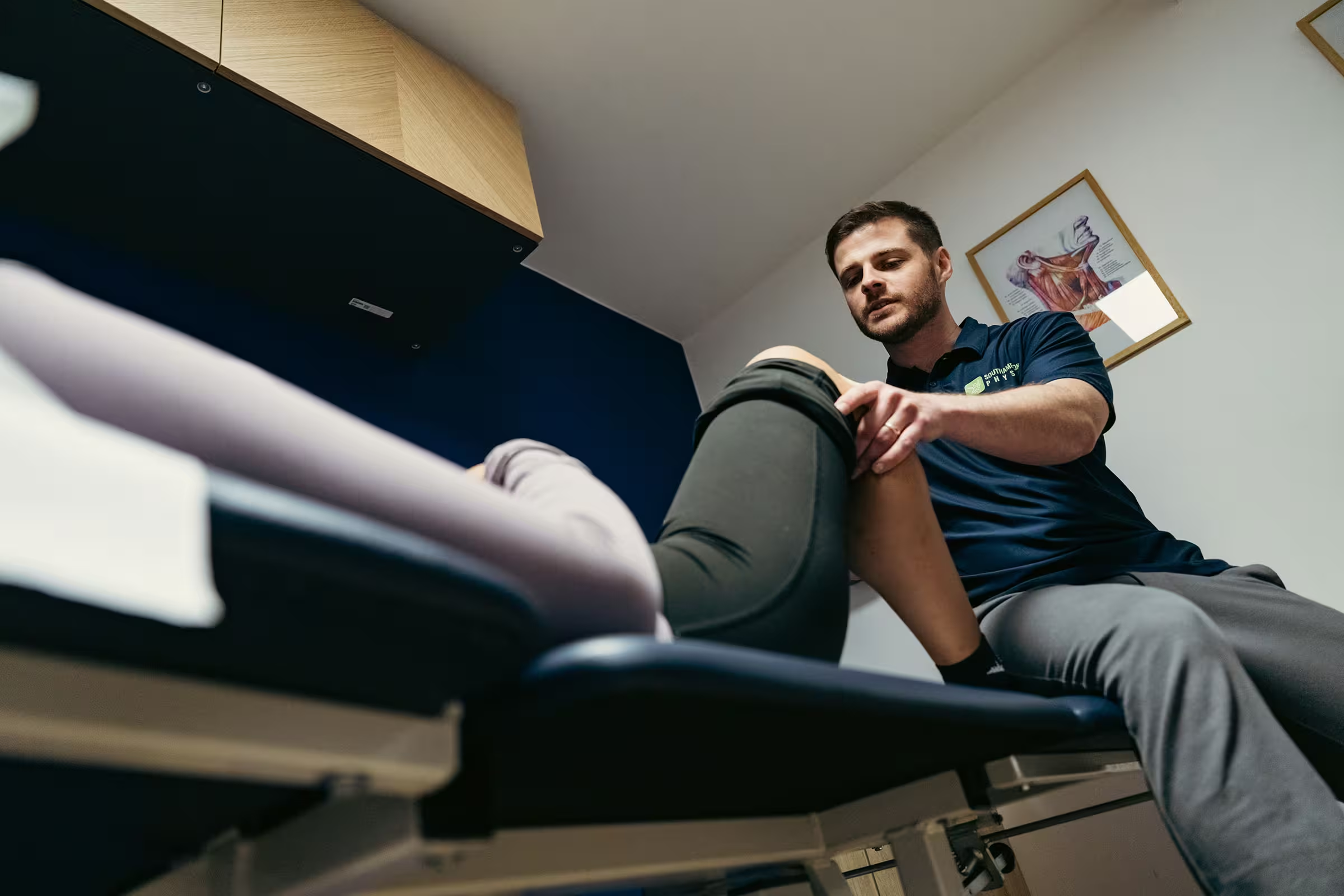
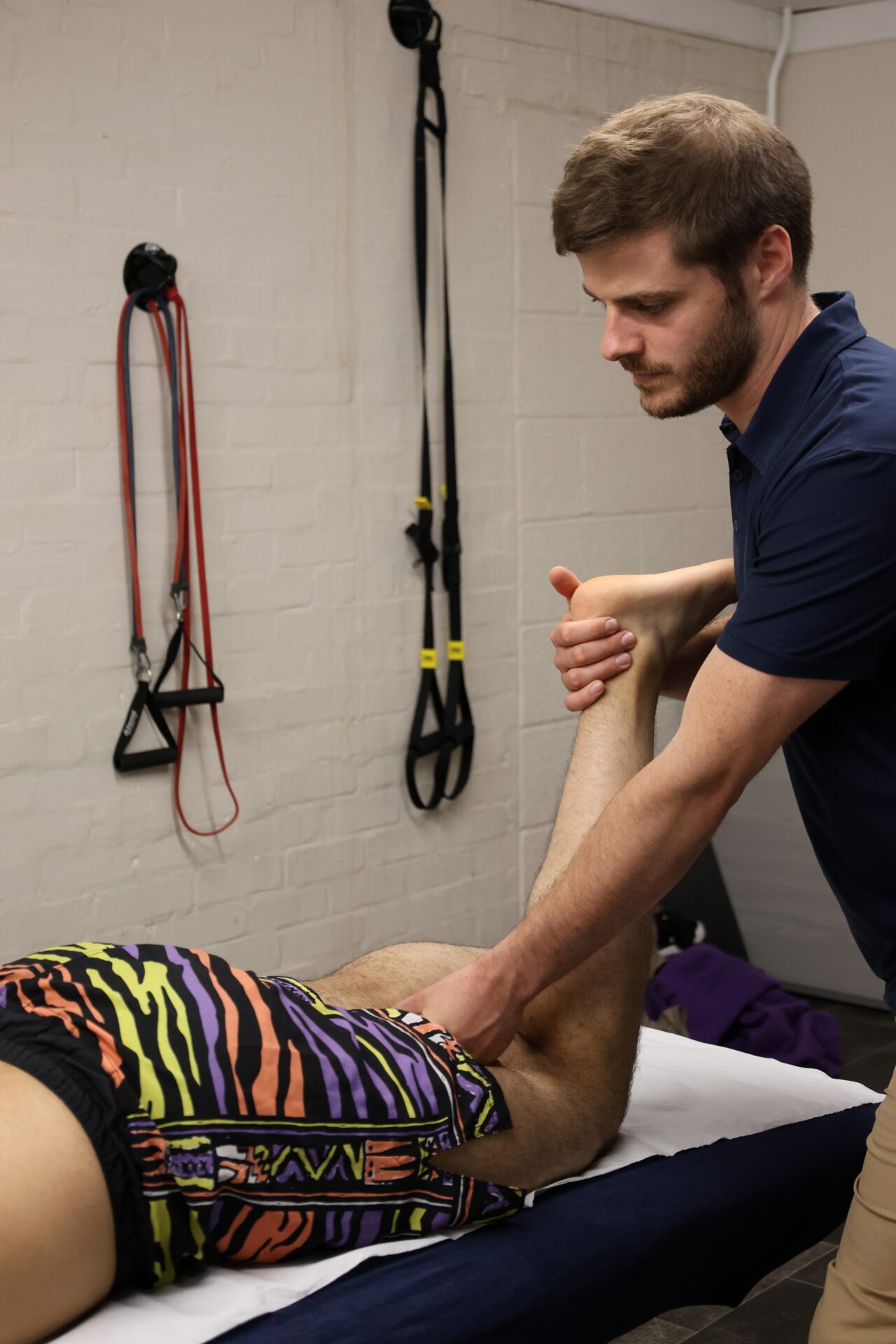
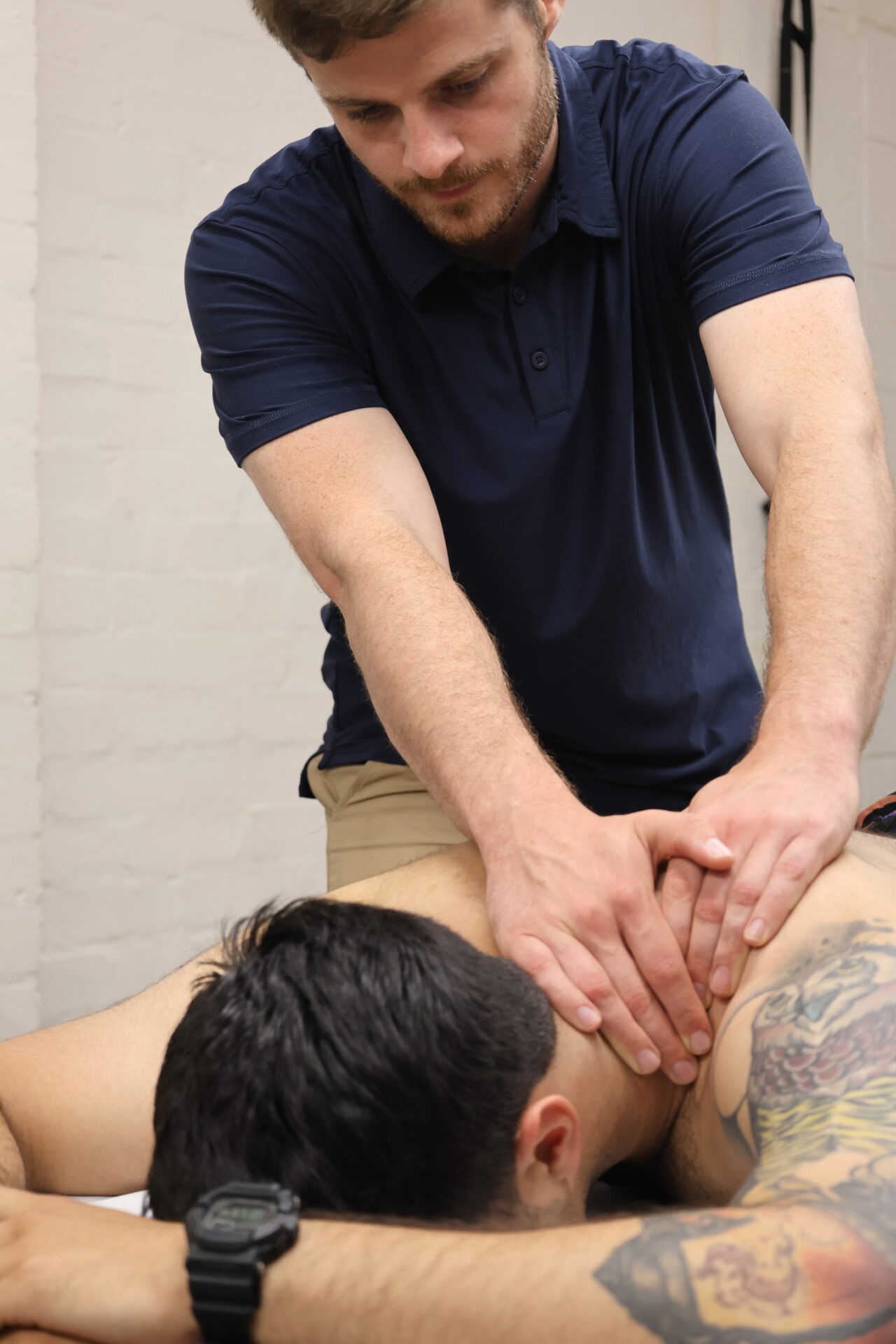
- Manual therapy to improve mobility, relieve muscle tension, and restore movement. Manual therapy works best as part of a multimodal approach combined with exercise and education (Greaves et al., International Journal of Osteopathic Medicine, 2024).
- Dry needling and sports massage for recovery and circulation.
- Joint mobilisations and taping to offload irritated structures in the short term.
3. Climbing-Specific Rehabilitation
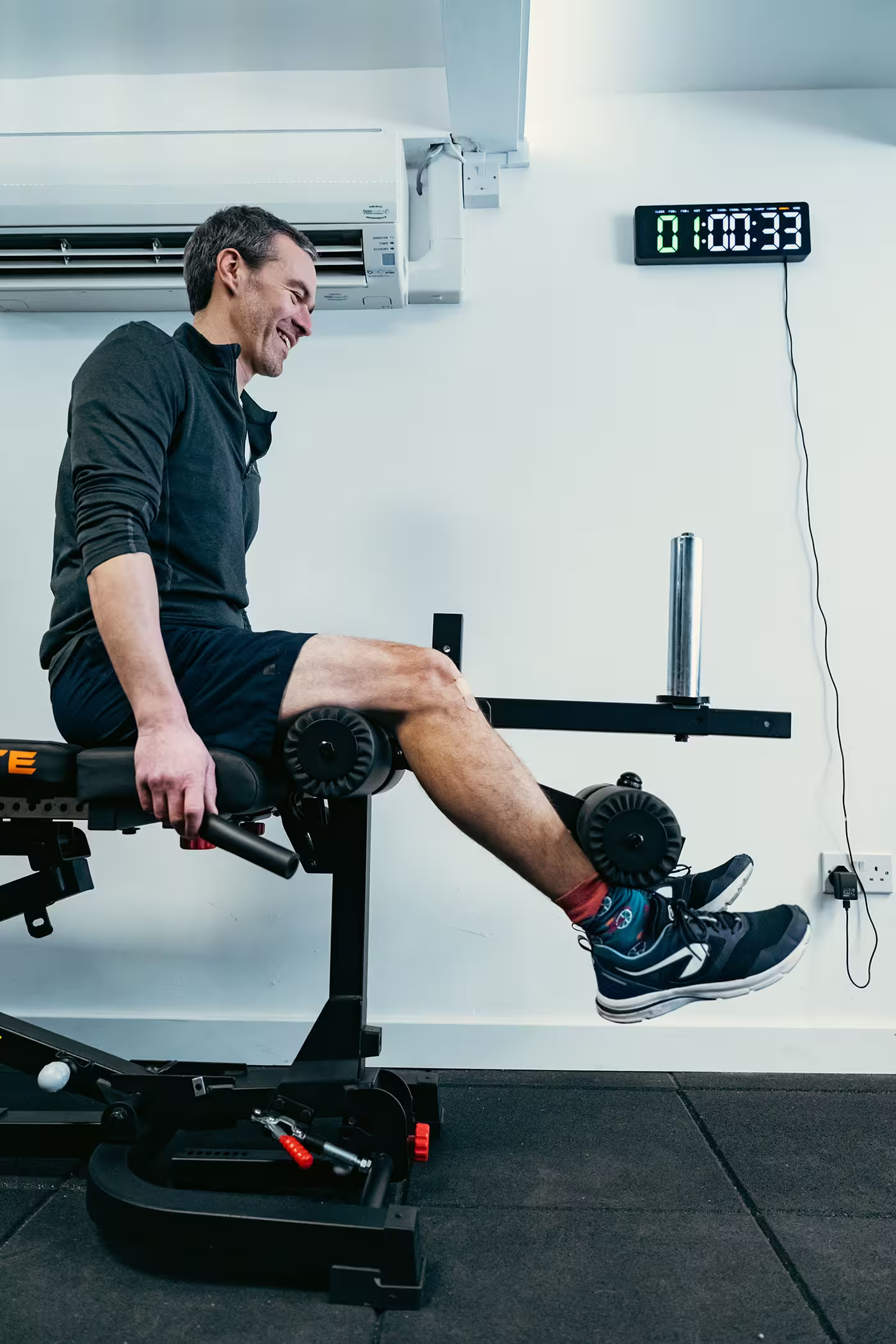
- Progressive loading plans for finger pulleys, tendons, and shoulders — graded isometric and eccentric work appropriate to your stage of healing.
- Climbing-specific strength: grip endurance, scapular control, antagonist work (rotator cuff, wrist extensors), and core stability.
- Return-to-climbing protocols to rebuild confidence and tolerance without re-injury.
4. Performance Coaching with High Life Climbing
- Exclusive collaboration with Oli Cheshire (High Life Climbing) — rehab doesn't stop at recovery, it includes climbing-specific strength and movement coaching.
- Mobility and technique adjustments to improve efficiency on the wall.
- Training load management to prevent the recurrent overuse pattern that drives most climbing injuries.
For climbers with persistent or recurrent injuries that haven’t responded to standard physio, our Clinical Personal Training programme offers a deeper 12–16 week pathway that integrates the full team for complex root-cause work.
What You Can Start Doing Today
While you’re waiting for your assessment:
- Reduce volume and intensity, but don’t stop moving completely. Drop a grade, shorten sessions, or avoid the specific grip types that aggravate it. Complete rest usually isn’t necessary and can delay recovery — you want a level of activity your tissues can tolerate.
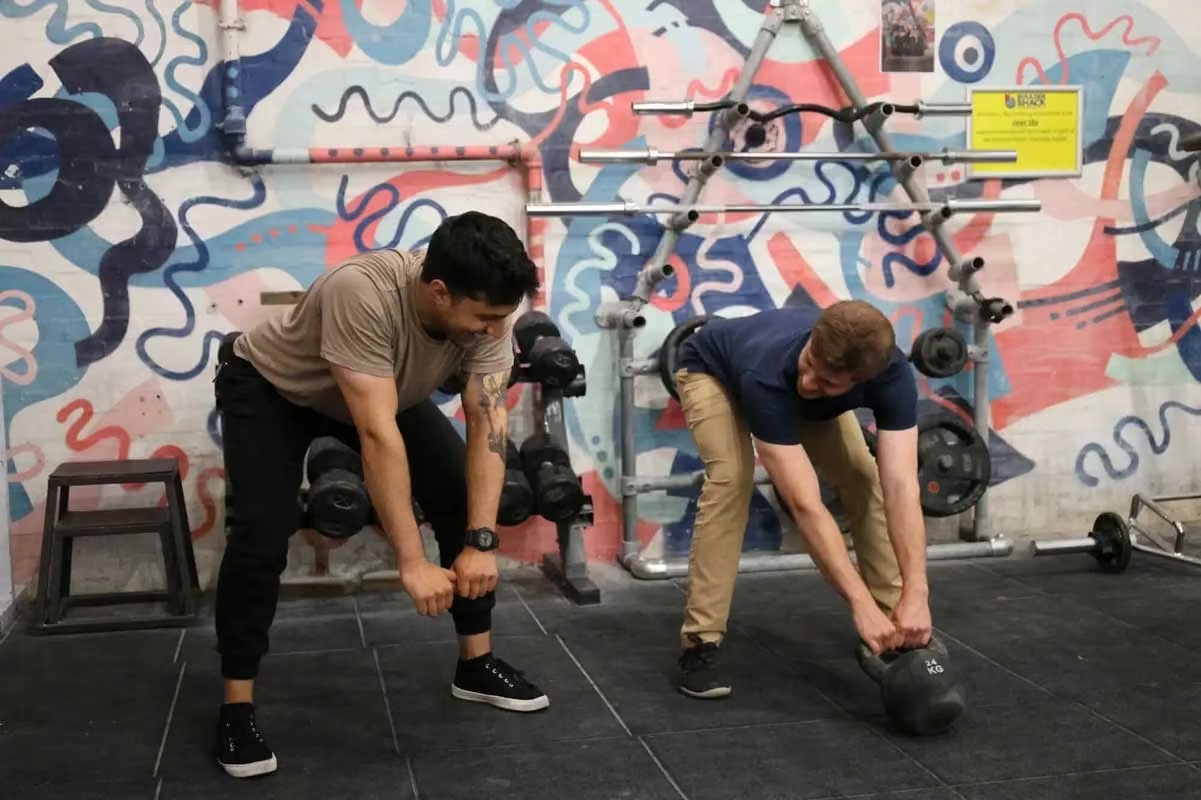
- Start antagonist work. Climbers are chronically strong in pulling and gripping but often weak in opposing muscle groups. Begin with banded external rotations, wrist extensor strengthening with a light weight, and scapular retraction exercises.
Track your symptoms and your climbing load. Note which movements hurt, how much (out of 10), and what you did in the session before pain appeared. This is invaluable at assessment.
Why Choose Southampton Physio for Climbing Injuries?
- Climbing-specific expertise — we treat a lot of climbers. That matters because climbing injuries are specific (finger pulleys, A2 strains, rotator cuff issues, climber's elbow) and need sport-specific assessment, not generic sports injury protocols.
- Partnership with High Life Climbing — Oli Cheshire works alongside our clinicians so rehab transitions seamlessly into climbing performance coaching.
- Integrated team — our physios, osteopaths, and strength coaches work together. You get a coherent plan, not a series of disconnected appointments.
- Climbing-focused environment at Boulder Shack — access to climbing-specific rehab tools and an environment that takes the sport seriously.
- Evidence-based and clinically authoritative — Ian Greaves is a Registered Osteopath with published research on manual therapy and musculoskeletal pain (International Journal of Osteopathic Medicine, 2024). Treatment is based on current evidence, not guesswork.
- Long-term support — whether you're recovering from an injury or building resilience to climb stronger for longer, we provide ongoing coaching and performance training.
We’re located at 35 Bedford Place in central Southampton, easily accessible from Portswood, Shirley, and Ocean Village.
Success Stories from Climbers Like You
“I injured my shoulder from overtraining, and I was devastated thinking I’d lose months of progress. The team at Southampton Physio not only got me back on the wall, but with Oli’s coaching, I feel stronger and more efficient than ever. I wish I’d done this sooner!”
— James, Sport Climber
“After a pulley injury, I kept trying to push through the pain — until I realised I was making it worse. These guys helped me rehab properly, fix my training mistakes, and now I climb without fear of re-injury.”
— Emma, Boulderer
“Amazing service. Helped me properly diagnose a finger injury from climbing through assessment and gave me lots of great information and exercises to fully recover. Will definitely use in the future if (or more likely when) I get further injuries from bouldering!”
— Mitch Singer, Climber
Frequently Asked Questions (FAQs)
How long does it take to recover from a climbing injury?
It depends on the severity and type. Mild finger pulley strains can resolve in 4–6 weeks with appropriate load management; more significant pulley injuries take 8–12 weeks. Shoulder and elbow tendinopathies typically show meaningful change in 8–12 weeks with structured rehab. Tendons respond to progressive loading, so rushing back tends to extend recovery rather than shorten it.
Can I keep climbing while recovering?
In most cases, yes — with modifications. We’ll guide you on safe adaptations: dropping a grade, avoiding specific grip types, or limiting session length so you continue to load tissues at a tolerable level without making things worse.
What is the most common climbing injury?
Finger flexor pulley injuries are the most commonly reported, especially in boulderers. Shoulder pain and elbow tendinopathies are also very common — overuse injuries to the upper extremity dominate the picture.
When should I see a climbing injury specialist?
If pain persists for more than two weeks despite rest or modified climbing, if it’s getting worse, or if it’s preventing you from climbing altogether — book an assessment. Early intervention usually means faster recovery and less time off the wall.
Do I need a scan for my climbing injury?
Usually not. Most climbing injuries can be diagnosed through clinical assessment — testing grip strength, range of motion, and pain patterns. We refer for ultrasound or MRI only when we suspect a complete pulley rupture, a significant rotator cuff tear, or another structural issue that would change your management.
What should I do if I hear a pop in my finger while climbing?
Stop climbing immediately. Apply ice, rest the finger, and book an assessment as soon as possible. A pop often indicates a pulley injury, and early diagnosis guides appropriate management and prevents further damage.
Is surgery ever needed for climbing injuries?
Rarely as a first option. Most climbing injuries — including most pulley injuries — are managed conservatively with physiotherapy and progressive loading. Surgery is typically considered only for complete pulley ruptures with visible bowstringing, significant rotator cuff tears that haven’t responded to rehab, or unstable fractures.
How can climbing injuries be prevented?
Build volume gradually, include antagonist strengthening (rotator cuff, wrist extensors, scapular stabilisers), warm up properly, and respect early niggles rather than climbing through them. For older recreational climbers, structured strength work is one of the highest-value things you can do to climb sustainably for the long haul.
Do you offer online consultations?
Yes — we provide virtual assessments and rehab plans for climbers who can’t make it in person.
Do I need to be injured to benefit from the clinic?
Not at all. Many climbers come to us for movement screening, antagonist training, and injury-prevention strategies to climb harder and avoid setbacks.
Booking
Book Your Appointment and Climb Stronger
Don’t let injuries hold you back. Whether you’re dealing with pain, a recent injury, or want to refine your climbing technique, we can help.
Call us on 023 8110 2077 or book online. We’ll get you assessed, give you a clear explanation of what’s going on, and build a plan to get you back to climbing sustainably.
Author: Ian Greaves, MOst, Registered Osteopath (GOsC 11228), iO 106967
Patient Review
What Our Patients Are Saying
 Excellent
5.0172 reviews
5.0Excellent172 reviewsPosted on Google
 Marion Clelland22 days agoI cannot recommend Richard highly enough. After eight years of living with almost constant knee pain, I genuinely thought I was going to have to learn to live with it. The biggest impact wasn’t just the pain itself. My knee was constantly in the back of my mind and it affected the relationship I had with my daughter. I felt unable to do simple things like run around the garden or play ball games with her, and I wasn’t the involved, active mum I wanted to be. I had seen other physios over the years, but I never felt that they took the time to really understand what was going on. They tended to reach a conclusion quickly and focus on the knee itself. After eventually seeing a consultant and having an MRI which showed that my knee was essentially fine, I was even more convinced that I was simply going to have to live with the problem. Richard took a completely different approach. He spent time understanding not only my knee, but the impact the problem was having on my life. He didn’t dismiss the fact that I was genuinely in pain, but he explained how pain and the memory of pain can make the body become overly protective and sensitive. That holistic approach really resonated with me. The rehabilitation wasn’t simply a list of exercises. Every exercise had a purpose. Some were about strengthening weaker areas, while others deliberately introduced movements I had become wary of — twisting, changing direction and gradually getting used to discomfort without assuming that something was going wrong. Richard gently challenged my assumptions about what I could and couldn’t do, while always explaining why we were doing something and what I should be feeling. Most importantly, the whole programme was built around what I actually wanted to get back to doing. He understood that I wanted to be active, get back to yoga, be able to run for a bus, and play with my daughter without constantly worrying about my knee. About halfway through my sessions, I realised that I had started going days without thinking about my knee. That might sound like a small thing, but after eight years of it occupying a large part of my attention, it was enormous. I’m now back at yoga and can balance confidently on one leg. I can even hop around the garden on one leg at speed while catching a ball — something that would have been completely alien to me for most of the last eight years. I sometimes still get an ache, but my whole interpretation of it has changed. I no longer automatically associate it with weakness or damage; I understand that I have challenged it and sometimes it simply needs time to recover. Richard is an exceptional listener and has a real ability to sympathetically challenge your assumptions without ever making you feel foolish. He also gave me the independence to manage my recovery around working and family life. I particularly liked the way our discussions and exercises were documented and emailed to me, so I had something to refer back to at home. The appointments were efficient without ever feeling rushed — we covered a huge amount of ground and I always came away knowing what I needed to do and why. After eight years of thinking I was going to have to live with my knee problem, Richard believed that I didn’t have to — and, more importantly, he made me believe it too. If you have a long-standing problem and are considering seeing Richard, don’t even consider going somewhere else.Posted on Google
 Chris Revill25 days agoPosting this on behalf of my mother in law, Lina Watts. I used to have very limited mobility in my right arm. Someone recommended the Southampton Physio to me. When I arrived for the first time, I was greeted warmly and it made me feel very relaxed. Richard explained to me how he will analyse and help me with my problem. Now I have regained mobility in my right arm and I’m happy to recommend Southampton Physio. I thank Richard for his help. In my opinion his knowledge is second to none.Posted on Google
 Gabriela Barrett-Smith27 days agoRichard was super accommodating with an injury I was dealing with. He listened to what was going on, put together a really good plan, and I’ve made a lot of progress since. Definitely recommend.Posted on Google
 Nathan Johnson29 days agoBooked an appointment after I injured myself running. Richard has been very knowledgeable about the cause of injury and also with the recovery process. Ensuring that each stage is achievable and manageable around family life. Highly recommend Southampton Physio to anyone who would benefitPosted on Google
 Archana34 days agoExcellent support and encouragement I’ve had a really positive experience with Southampton Physio, especially with Richard. He has been very patient, caring and encouraging, always taking the time to explain things clearly. He has helped me gradually build my strength and confidence. My legs and feet were painful and felt less stable before, but I’m now noticing much better stability and feeling stronger. It’s been a gradual process, but the progress has been very encouraging. I’m very grateful for Richard’s support and would definitely recommend him.Posted on Google
 Claire Robinson43 days agoA great experience. Felt very supported by Richard who was very knowledgeable and listened. Richard was very reassuring and realistic. Richard worked with me as an individual and helped me to understand what my body needs. I followed his advice and we tweaked exercises as necessary and I’ve just completed a half marathon. Thank you Richard!Posted on Google
 June Davis62 days agoI would highly recommend Southampton Physio - they have a great team, friendly and caring. My knee pain was diagnosed and sorted with a good strength training plan tailored to me. I am very pleased.Posted on Google
 alan fraser70 days agoExcellent service, professional, understanding and providing a tailor made approach. I would recommend this physo. I feel I am making good progress in my fitness and flexibilityPosted on Google
 José Cruz106 days agoExcellent service.Posted on Google
 Debra Rich113 days agoBeing a very active woman of 66 years, slowing down was not an option, until I hurt my back in October 25, but rather than make a recovery, the pain worsened, I was in pain no matter what I did, struggled to walk etc. I’d been told by an NHS physiotherapist that the damage had already been done, the exercises given made no difference. I was turned away by a chiropractor due to osteoporosis & a history of fractures. My GP sent me for an xray that showed two old fractures, degeneration and a vertebral process which must have been trapping nerves. There was no further treatment offered. I visited Ian Greaves for a consultation on 21 May 26. I have now had five sessions of physiotherapy with him and the difference is amazing. Obviously I have to put the work in to gain any improvement, but the difference is incredible. I frequently sail single handed and thought I would have to give the hobby up, but having just returned from 11 days away, having to pull lines, balance, lift an outboard on & off the boat to the dinghy & pull start it, row the dinghy & heave it up onto the transom. I am elated. I signed up to 12 week course, so that the exercise regime would become a habit. Personally I think if anyone really wants recovery then that is a desirable plan, 4 weeks just wouldn’t have been enough for me. Thank you Ian, see you next week!Verified by TrustindexTrustindex verified badge is the Universal Symbol of Trust. Only the greatest companies can get the verified badge who has a review score above 4.5, based on customer reviews over the past 12 months. Read more