
POTS (Postural Orthostatic Tachycardia Syndrome) Treatment in Southampton

Ian Greaves
MOst, Registered Osteopath (GOsC 11228), iO 106967]
POTS (Postural Orthostatic Tachycardia Syndrome) is a form of autonomic dysfunction characterised by an excessive increase in heart rate, at least 30 beats per minute in adults, within 10 minutes of standing, without a significant drop in blood pressure (Sheldon et al., Heart Rhythm, 2015). It affects roughly 0.2–1% of the population, with more than 75% of patients being female (Sheldon et al., 2015). At Southampton Physio, we’re a hypermobility-specialist clinic, and POTS commonly sits alongside the hypermobility conditions we work with every day. We’re POTS-aware and can help you build exercise tolerance safely, adapt movement around your symptoms, and work alongside your medical team.
Is This What You're Feeling?
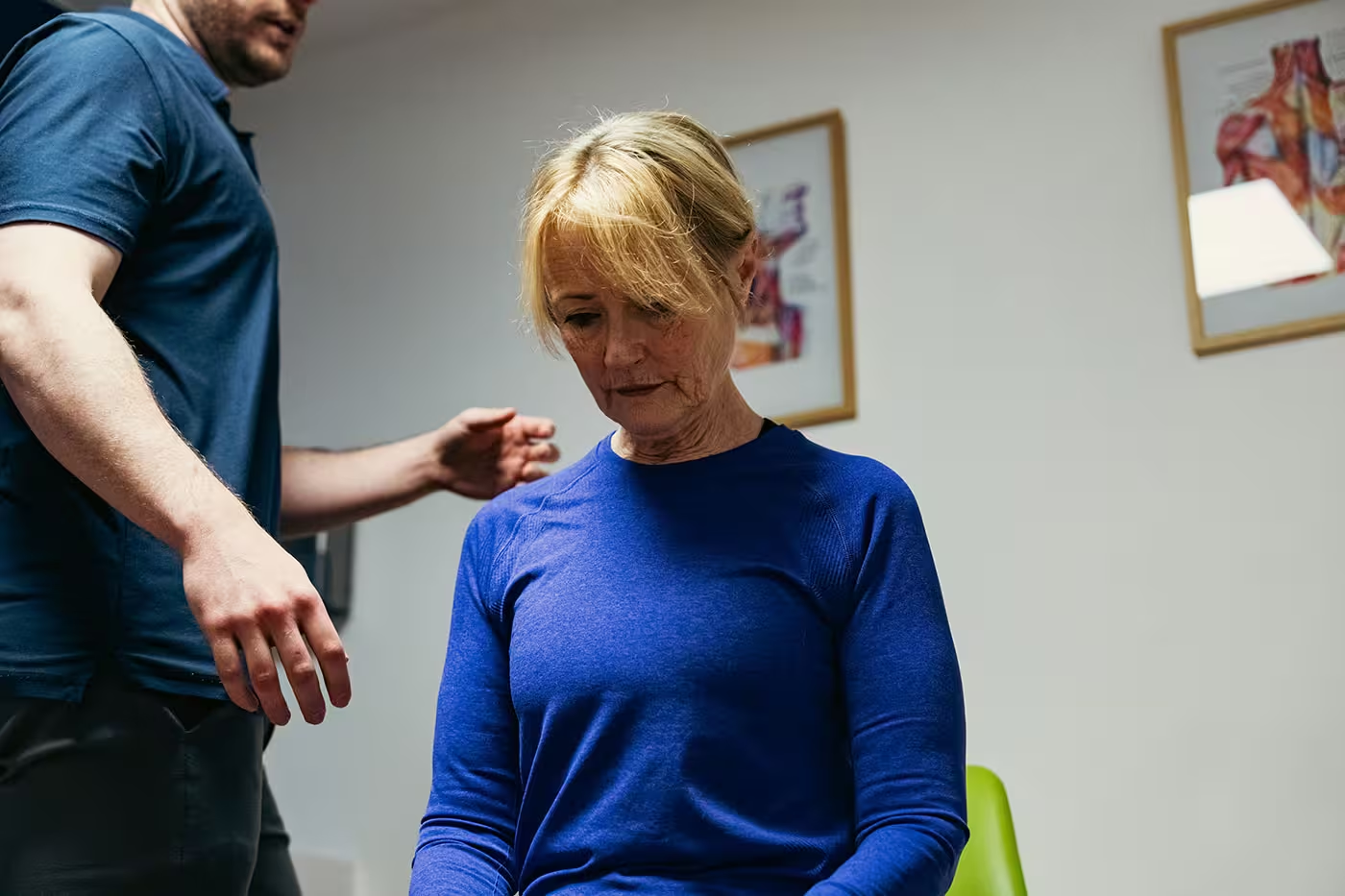
- Rapid heart rate on standing. Your heart pounds or races when you stand up, sometimes taking minutes to settle.
- Dizziness or lightheadedness. Feeling faint or unsteady when upright, particularly first thing in the morning.
- Overwhelming fatigue. Exhaustion that's out of proportion to what you've done, often worse after being upright for a while.
- Brain fog and difficulty concentrating. Struggling to focus, find words, or think clearly, especially when standing.
- Exercise intolerance. Physical activity that once felt manageable now leaves you wiped out for days.
Why Does POTS Develop?
POTS develops when the autonomic nervous system, the part that controls automatic functions like heart rate and blood pressure, doesn’t regulate blood flow properly when you stand up. In healthy circulation, blood vessels in your legs constrict when you stand, pushing blood back to your heart and brain like a well-tuned hydraulic system. In POTS, this mechanism fails, blood pools in your legs, and your heart rate spikes to compensate.
Several factors can trigger or contribute to POTS:
- Post-viral illness. POTS has been increasingly recognised after COVID-19 infection. Research published in Circulation: Arrhythmia and Electrophysiology (2024) found that 31% of highly symptomatic long COVID patients were diagnosed with POTS
- Hypermobility and connective tissue conditions. There's substantial overlap between POTS and joint hypermobility syndromes like Ehlers-Danlos Syndrome (EDS). Stretchy blood vessels may struggle to constrict effectively.
- Reduced blood volume. Up to 70% of POTS patients have lower-than-normal blood volume, meaning less circulating fluid for the heart to pump (Sheldon et al., Heart Rhythm, 2015).
- Deconditioning. Prolonged illness or inactivity can worsen POTS symptoms. Deconditioning doesn't cause POTS, but it can make symptoms significantly worse once POTS has developed.
- Mast cell activation or immune changes. Some patients have underlying immune or inflammatory processes that affect autonomic function.
How Can Southampton Physio Help You Build Exercise Tolerance with POTS?
Your First POTS-Aware Assessment
Strength, Pilates and Clinical Personal Training
Exercise Tolerance and the Evidence Base
What Exercises Are Safe with POTS?
Recumbent and semi-recumbent exercises are the safest starting point:
- Rowing machine (seated or recumbent)
- Recumbent bike
- Swimming or water-based exercise
- Supine or side-lying strengthening exercises
- Resistance band work while seated
As tolerance improves, you can introduce:
- Upright cycling
- Treadmill walking with gradual incline
- Bodyweight or light resistance exercises in standing
- Progressive return to sport-specific movements
What to avoid early on:
- Prolonged standing without movement
- High-intensity interval training (until tolerance is established)
- Hot environments (heat worsens symptoms for most people)
- Dehydration. Fluid intake is critical.
How Are POTS and Hypermobility Connected?
There’s significant clinical overlap between POTS and hypermobility conditions, particularly Ehlers-Danlos Syndrome (EDS) and hypermobility spectrum disorders. The mechanism is thought to involve connective tissue itself: stretchy, elastic blood vessels may struggle to constrict effectively when standing, contributing to the blood pooling that drives POTS symptoms.
If you have both POTS and hypermobility, exercise needs careful modification:
- Joint protection is essential. Hypermobile joints are prone to injury, especially when fatigued.
- Strengthening exercises should emphasise control and stability, not excessive range of motion.
- Compression garments (20–30 mmHg) can help with both blood pooling and joint proprioception.
What Should I Avoid with POTS?
Prolonged bed rest and complete inactivity.
Graded exercise therapy (GET) if you have ME/CFS.
Environmental triggers that worsen symptoms:
- Hot environments (saunas, hot showers, warm weather)
- Prolonged standing without movement
- Dehydration or inadequate salt intake
- Large meals, particularly high-carbohydrate
- Alcohol consumption
- High-intensity exercise before establishing tolerance
Activities that exceed your current capacity.
When Should I See a Specialist for POTS?
- Chest pain with syncope (fainting) or near-syncope
- Syncope during exercise or exertion
- Family history of sudden cardiac death
- Structural heart disease identified on echocardiogram
- Arrhythmias on ECG monitoring
If you have hypermobility alongside POTS, or if you’re struggling to rebuild strength and movement around your autonomic symptoms, physiotherapy can provide structured guidance. We won’t replace the role of your autonomic specialist, but we can be a useful part of the team working alongside them.
What You Can Start Doing Today
- Increase fluid and salt intake. Aim for 2–3 litres of fluid daily and 10–12g of sodium (unless you have high blood pressure or kidney disease, check with your GP first). This addresses the reduced blood volume present in up to 70% of POTS patients.
- Wear compression garments. Abdominal binders and compression stockings (20–30 mmHg) improve venous return and reduce blood pooling. Many people find abdominal compression particularly helpful.
- Try recumbent exercise. A rowing machine or recumbent bike for short, low-intensity sessions (5–10 minutes) is the safest entry point for rebuilding exercise tolerance.
Why Choose Southampton Physio for POTS Support?
We’re a hypermobility-specialist clinic. POTS often sits alongside the hypermobility conditions we work with every day, and we’ve built the strength, Pilates and Clinical Personal Training side of our practice to adapt around the complexity that comes with autonomic involvement.
Our approach is:
- Hypermobility-led. Our day-to-day expertise is hypermobility, EDS and the complex presentations that come with them. POTS often forms part of that picture.
- POTS-aware. We understand the principles of POTS rehabilitation, recognise red flags, and adapt our work accordingly. We're not a POTS rehab service in the specialist autonomic sense, and we'll always tell you if your situation needs that level of input.
- Patient-centred. We start where you are and adjust as you progress.
- Collaborative. We work alongside your medical team. Your cardiologist or autonomic specialist leads on POTS itself.
Our clinic is located at 35 Bedford Place, Southampton, SO15 2DG, and we see patients from across Southampton, Eastleigh, Winchester, and the wider Hampshire area.

Frequently Asked Questions About POTS in Southampton
Can physiotherapy help with POTS?
What physio exercises can you do with POTS?
What can trigger POTS to flare up?
How do you treat POTS in the UK?
Do you have POTS your whole life?
Can emotional trauma trigger POTS?
Do I need a scan for POTS?
How many sessions will I need?
What should I do if I feel faint during exercise?
Can I exercise if I have both POTS and ME/CFS?
Ready to Get Moving Again?
Living with POTS is challenging, but structured, evidence-based movement can make a meaningful difference. If you have hypermobility alongside POTS, or if you’re looking for a clinic that will work patiently and thoughtfully with you around your autonomic symptoms, we can help.
We’ll work within your limits, adapt around your symptoms, and build a plan that respects where you are now.