
Hypermobility Spectrum Disorder Treatment in Southampton
You’re reaching for something on a high shelf and your shoulder clicks in a way that makes you wince. Your friends marvel at how you can bend your thumb back to touch your wrist, but what they don’t see is the ache that follows. You’ve always been “flexible,” but lately that flexibility feels more like a liability — joints that move too much, muscles that tire too quickly, and a nagging sense that your body just doesn’t feel stable.
Hypermobility Spectrum Disorder (HSD) comprises conditions where symptomatic joint hypermobility causes significant functional limitations, pain, and instability without fulfilling diagnostic criteria for hypermobile Ehlers-Danlos syndrome. The underlying mechanism involves abnormal collagen composition rendering ligaments more lax and extensible, reducing passive joint stabilisation. Approximately 30% of the general population experiences some degree of joint hypermobility, though only a minority — approximately 10% — experience symptomatic consequences requiring clinical intervention. At Southampton Physio, we treat people with HSD using evidence-based therapeutic exercise, motor control training, and progressive strengthening — approaches that research shows produce meaningful improvements in functional capacity, joint stability, pain reduction, and quality of life.
Is This What You're Feeling?
HSD affects different people in different ways, but certain patterns appear consistently:
- Joint pain and instability. Your shoulders, knees, ankles, or fingers feel unstable or painful during everyday activities. You might notice your joints hyperextend easily — elbows that bend backwards, knees that lock out past straight, thumbs that touch your forearm.
- Frequent minor injuries. You sprain your ankle more often than seems normal. Your shoulder subluxates — partially dislocates — during certain movements. Small injuries that others recover from quickly seem to linger for you.
- Fatigue and delayed recovery. Exercise leaves you more sore than it should, and that soreness lasts longer. You feel like your body needs more recovery time than other people's bodies do. Simple activities can feel surprisingly draining.
- Chronic regional pain. Pain in your neck, lower back, or hips that doesn't resolve with standard treatment. It's not always linked to a specific injury — it just builds up over time and doesn't go away.
- Proprioceptive difficulties. You feel clumsy or uncoordinated. You're not always sure where your joints are in space. You trip, bump into things, or misjudge movements more often than seems right.
These symptoms often develop gradually, sometimes starting in adolescence, sometimes appearing later. Women comprise approximately 70% of diagnosed cases and men 30%, representing a gender ratio of approximately 2.3:1 female to male, with females typically diagnosed earlier — by an average of 8.5 years. In the UK, diagnosed prevalence is 194.2 per 100,000 population in 2016/2017, or roughly 10 cases in a typical general practice of 5,000 patients — but many people remain undiagnosed or misdiagnosed for years.
Why Does hEDS Develop?
HSD develops when your connective tissue — specifically the collagen in your ligaments and joint capsules — is more extensible and less resistant to stretch than typical tissue. This increased laxity reduces the passive stabilisation your joints rely on, meaning your muscles have to work harder to control joint movement and prevent instability.
Ligaments are meant to act like taut cables, limiting joint range and providing a stable base for movement. When those cables are more elastic, your joints move into ranges they weren’t designed for, and your muscles and tendons take on stabilising work they weren’t built to handle alone. Over time, this creates a cycle: muscles fatigue trying to stabilise hypermobile joints, pain and dysfunction develop, and movement patterns change to protect the painful areas — which often makes the problem worse.
Research published in the Journal of Biomechanics (Thompson et al., 2022) found that hypermobile individuals exhibited significantly greater absolute angular errors in joint position sense testing at both elbow and knee joints. This means your brain’s internal map of where your joints are in space is less accurate, which affects your ability to control movement precisely. You’re essentially flying blind, which increases the risk of injury and makes it harder to build stable, efficient movement patterns.
This isn’t about joints being “too loose” in a way that needs tightening. You can’t tighten ligaments. What you can do is build strength, improve motor control, and train your proprioceptive system — the sensory feedback that tells your brain where your body is and how it’s moving. That’s the foundation of effective treatment.
Think of it like this: if your joints have a tolerance for load — a cup that can hold a certain amount of stress — HSD means your cup is smaller than average. Movement, load, fatigue, poor sleep, stress — they all add up. When the cup overflows, that’s when you feel pain. Treatment isn’t about making your ligaments less lax; it’s about increasing your tolerance and managing the load more effectively.
The condition is lifelong, but that doesn’t mean the symptoms are fixed. Most people with HSD see meaningful improvement with well-designed rehabilitation. It requires patience, consistency, and a realistic understanding of your body’s needs — but it’s far from hopeless.
Why symptoms flare and how to understand your capacity
Your First Assessment
Outcome: We establish a clear baseline of your joint stability, movement patterns, and functional limitations.
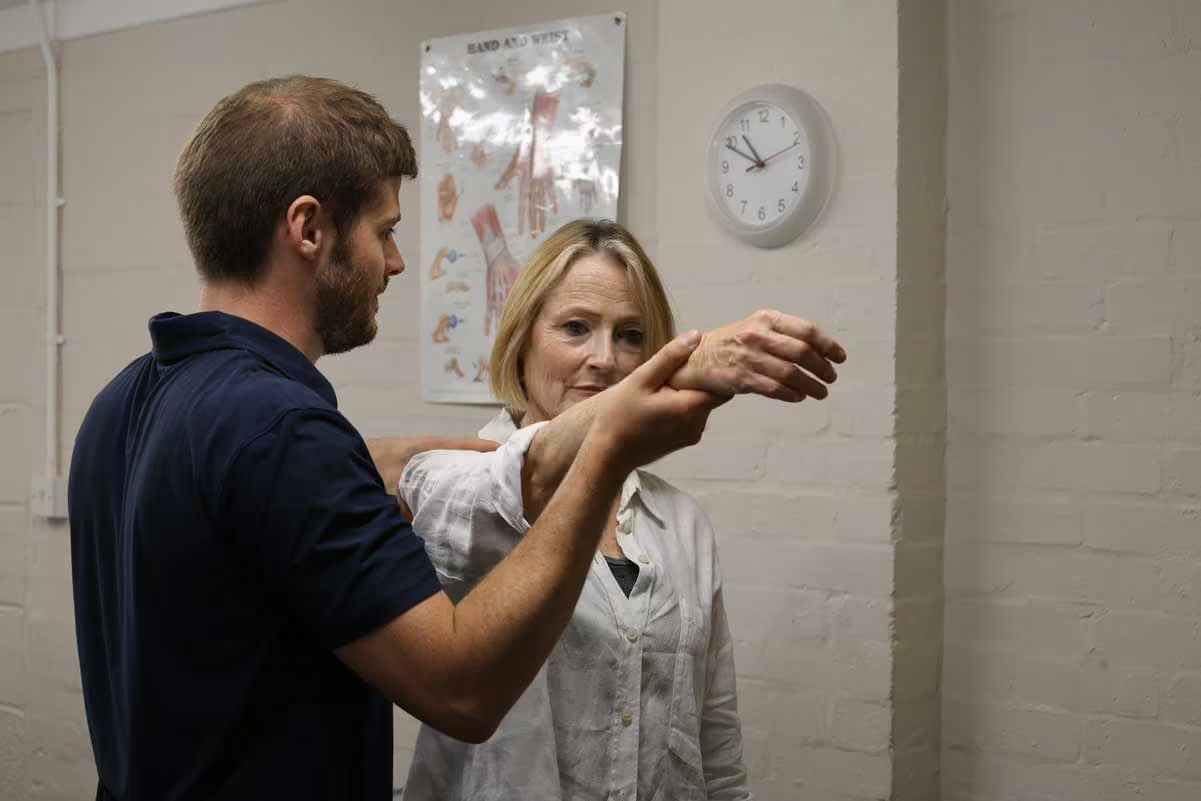
Your first session lasts 45 minutes. Ian Greaves, our director and a specialist in hypermobility and Ehlers-Danlos syndrome, will take a detailed history: when your symptoms started, which joints are affected, what makes them better or worse, what treatments you’ve tried, and what your goals are.
We’ll assess your joint range using the Beighton scoring system — a standardised tool that evaluates hypermobility at multiple sites. We’ll also assess muscle strength, proprioception, and movement quality. Hypermobile joints often move too much in some directions and not enough in others, so we’re looking for patterns of instability, compensation, and control.
We’ll discuss the difference between HSD and hypermobile Ehlers-Danlos syndrome (hEDS) — you may have been assessed for hEDS already, or this may be the first time someone has explained the distinction.
Learn more about hypermobile Ehlers-Danlos syndrome
By the end of the session, you’ll have a clear explanation of what’s happening, why, and what we’re going to do about it. You’ll leave with initial exercises to start building stability and control.
Hands-On Treatment
Outcome: We reduce pain, improve tissue quality, and prepare your body for progressive loading.
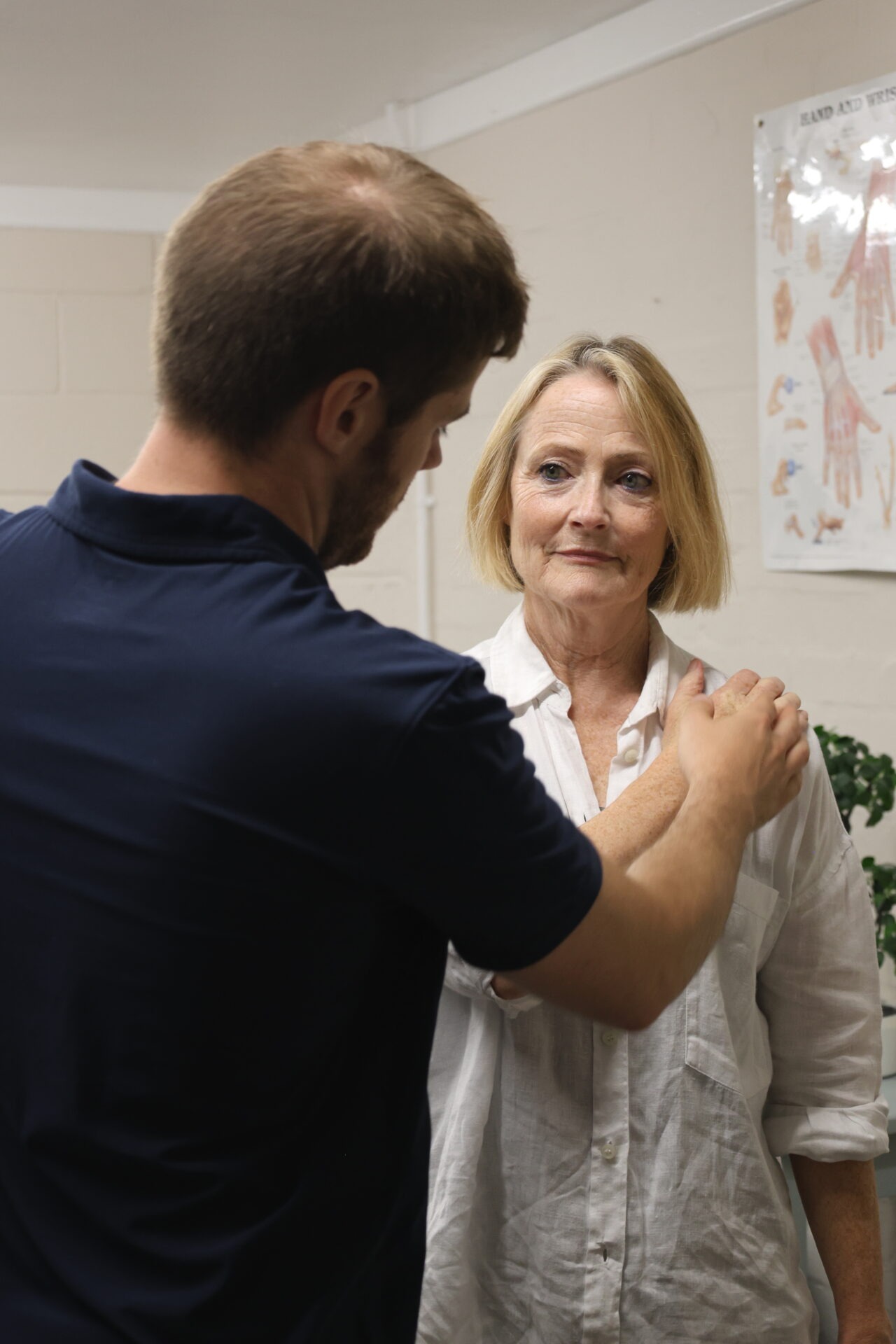
Manual therapy — soft tissue work, joint mobilisation, and osteopathic techniques — can help manage pain and improve movement quality in the short term. Research co-authored by Ian Greaves, published in the International Journal of Osteopathic Medicine (2024), supports the role of manual therapy as part of a comprehensive treatment approach for complex musculoskeletal conditions.
But manual therapy is not the fix. It’s an adjunct. It helps you feel better in the moment, which makes it easier to engage with exercise — the thing that actually changes your prognosis. We use it to calm flare-ups, address specific areas of irritation, and improve movement quality ahead of strengthening work.
Some people with HSD respond well to manual therapy; others find it irritating or unhelpful. We adjust based on your response. The goal is always to get you stronger and more stable, not to create dependence on hands-on treatment.
Building Long-Term Strength
Outcome: You develop the joint stability, motor control, and load tolerance that reduce pain and improve function.
This is the foundation of HSD treatment. Research published in Disability and Rehabilitation (Brittain et al., 2024) found that therapeutic exercise produces improvements in functional capacity, joint stability, pain reduction, and quality of life in people with HSD. A study published in the Journal of Clinical Medicine (Engelbert et al., 2022) found that high-load shoulder strengthening was statistically superior to low-load strengthening for self-reported function after 16 weeks, with no serious adverse events.
Your exercise programme will focus on three components:
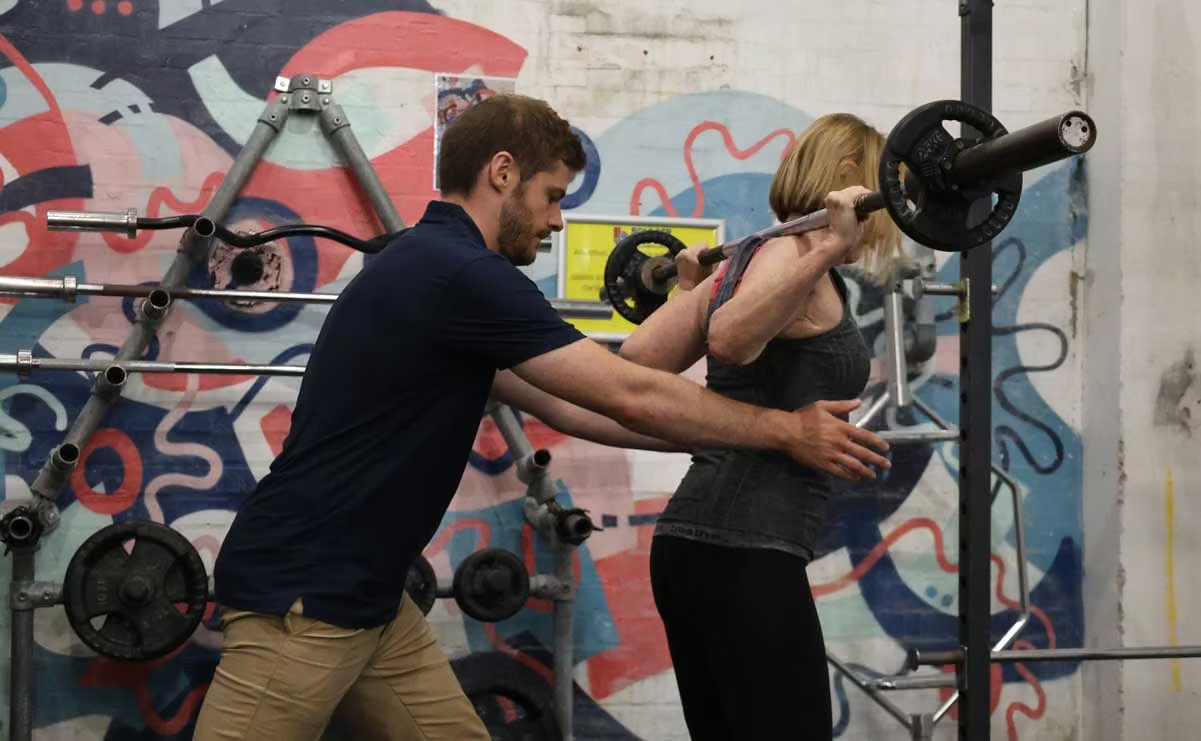
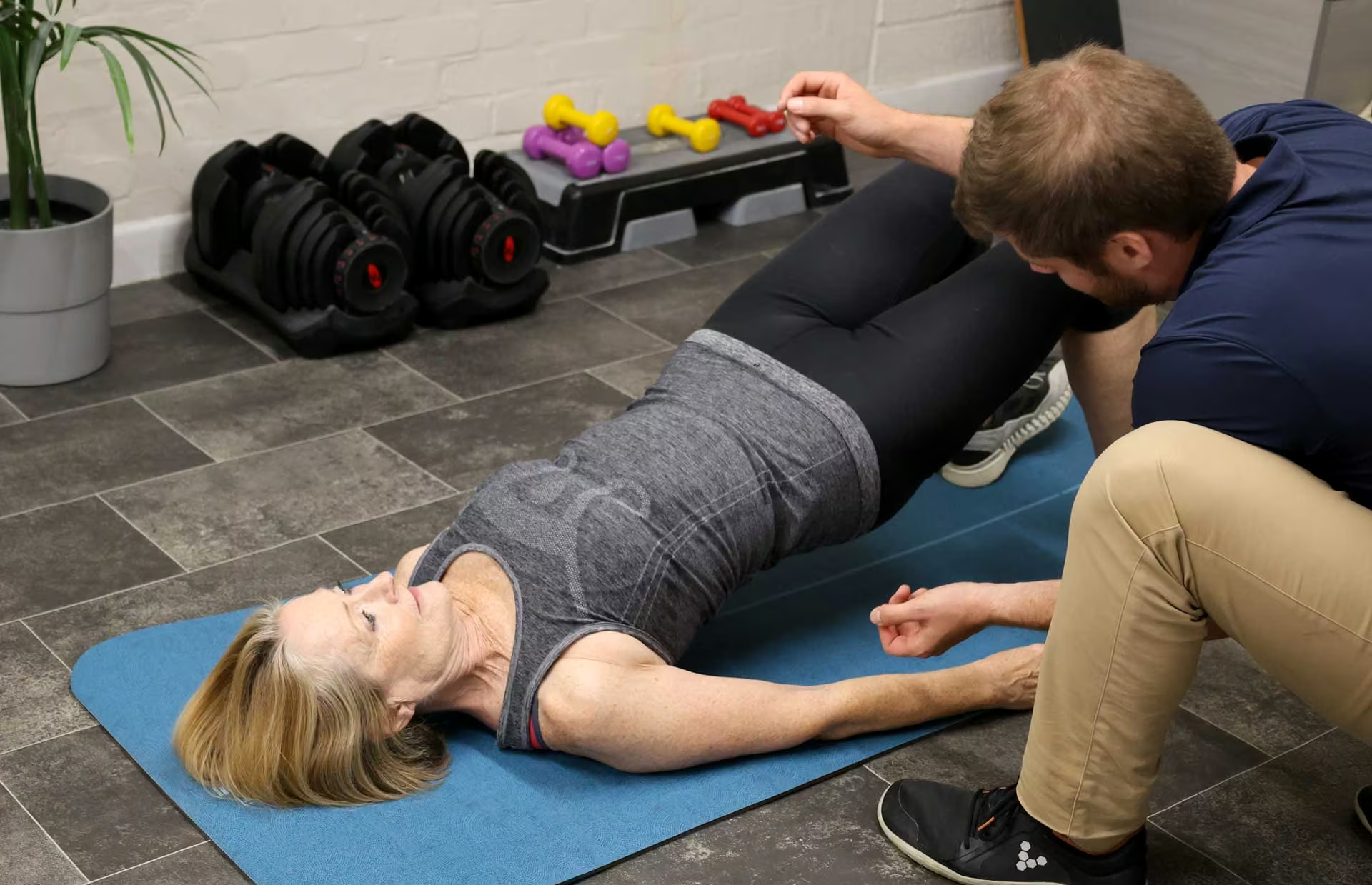
Strength training. Progressive resistance exercises targeting the muscles that stabilise your hypermobile joints. We start with a minimal effective dose — enough stimulus to drive adaptation, but not so much that you’re left unable to function. Individuals with HSD may experience greater delayed-onset muscle soreness (DOMS) and require more time to recover between treatment sessions, according to research published in Sports Medicine (Davies et al., 2024). This means we adjust frequency and volume based on your response. Three to four sessions per week — the standard recommendation for most people — is often unsustainable. We might start with one or two sessions per week and build from there.
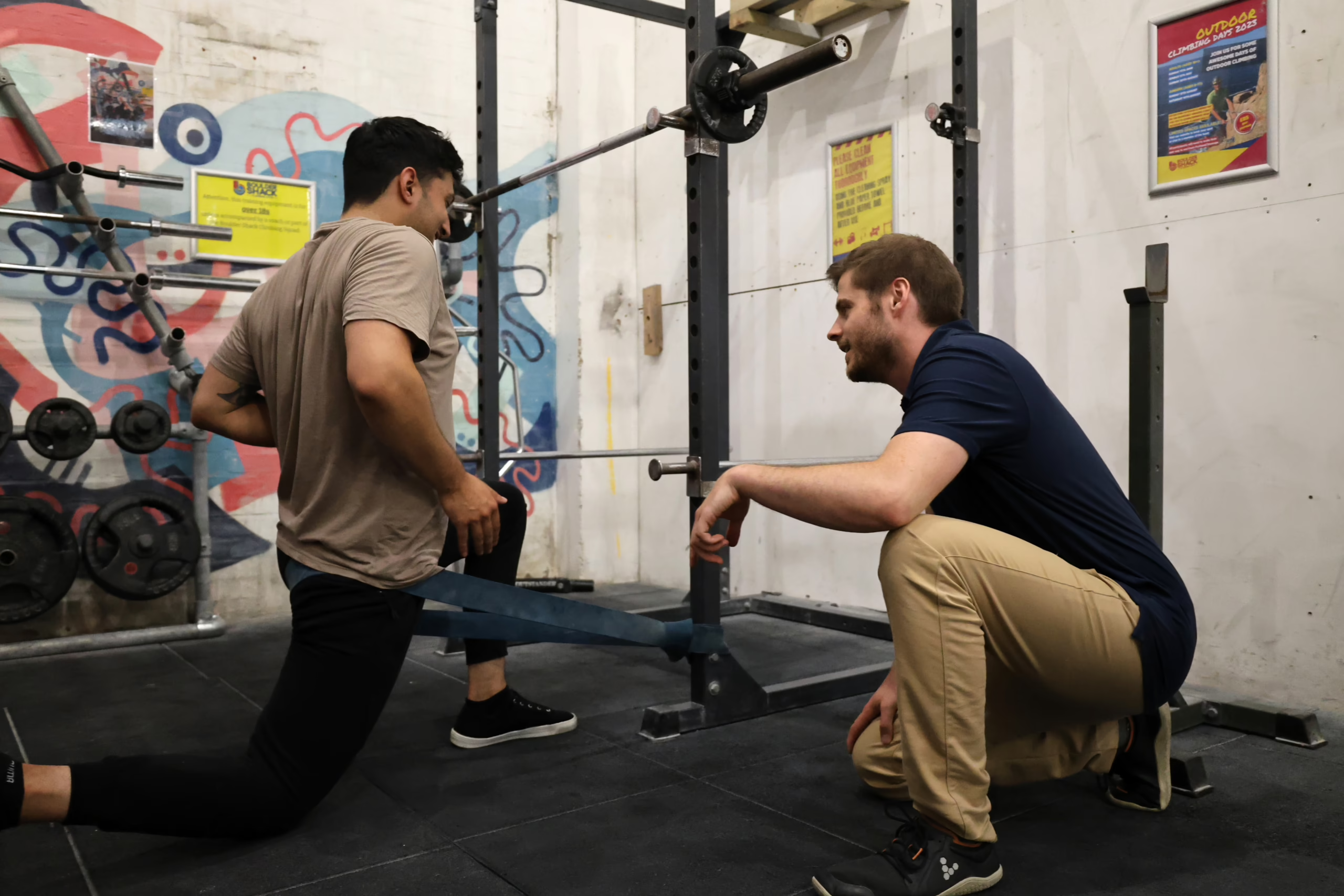
Motor control and proprioceptive training. Exercises that improve your brain’s ability to sense where your joints are and control them precisely. Closed-chain exercises — where your hand or foot is fixed on a surface — are particularly effective. An eight-week programme of closed-chain and proprioceptive exercises produced significant improvements in both proprioception and pain in people with hEDS and joint hypermobility syndrome, according to research published in Physical Therapy Reviews (Smith et al., 2019).
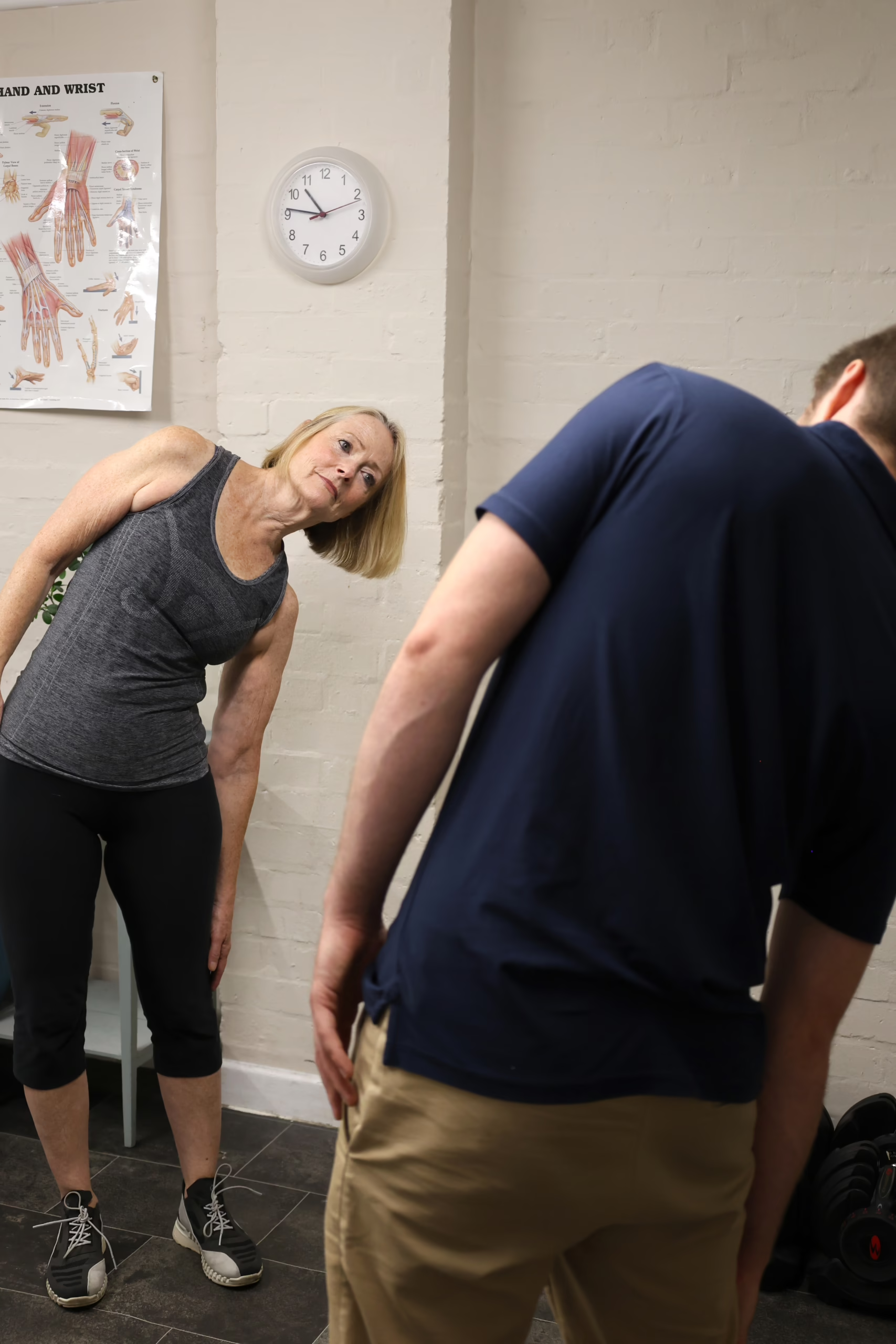
Movement retraining. Learning to move within functional ranges rather than hyperextending into end-range positions. Just because your joints can move into hyperextended positions does not mean they should. You’ll need explicit education about restricting movement to safe, stable ranges during exercise and daily activities.
For some people, especially those who’ve tried multiple treatments without lasting results, we offer a more comprehensive pathway that integrates our full team over 12–16 weeks. This is designed for persistent or complex issues that need a deeper root-cause approach.
What You Can Start Doing Today
While you’re waiting for your assessment, there are practical steps you can take:
- Avoid hyperextension during everyday activities. Pay attention to how you stand, sit, and move. If your knees lock back when you stand, soften them slightly. If your elbows hyperextend when you lean on a surface, keep a slight bend. This won't fix the problem, but it reduces unnecessary strain.
- Start with low-impact movement. Walking, cycling, swimming — activities that load your joints progressively without high impact. Avoid running or jumping until you've built a foundation of strength and stability. High-impact activities are not contraindicated forever, but they need to be introduced carefully.
- Focus on consistency, not intensity. You're better off doing a small amount of exercise regularly than attempting intense sessions sporadically. Your body needs frequent, manageable stimulus to adapt. Two or three short sessions per week will serve you better than one exhausting session.
Why Choose Southampton Physio for Hypermobility Spectrum Disorder?
Ian Greaves, our clinic director, has specialist training and extensive clinical experience treating people with HSD and hypermobile Ehlers-Danlos syndrome. He’s listed on the Ehlers-Danlos Support UK directory as a specialist clinician.
We don’t treat HSD as a simple musculoskeletal problem. We understand the multisystem nature of the condition — 97% of studies on HSD refer to physical manifestations, while 91% refer to psychological manifestations, according to a 2023 systematic review published in Clinical Psychology. We work closely with other members of our team, including physiotherapists, sports therapists, and clinical personal trainers, to provide integrated care when needed.
Our approach is evidence-based, patient-centred, and realistic. We don’t promise quick fixes. We don’t overpromise outcomes. What we do is explain what’s happening, design a programme that matches your capacity and goals, and support you through the process of building long-term stability and function.
“I’ve had 3 sessions with Ian now and they have been so helpful already and I’m really excited and optimistic to see my progress working with him. I have a fairly complex medical history but am seeing him predominantly for strength and conditioning training due to Hypermobility/EDS issues and his specialist understanding of it makes me feel so supported. Defo recommend.” — Sophie Marshall
We’re located at 35 Bedford Place in central Southampton, easily accessible from Shirley, Portswood, Ocean Village, and Woolston.
Frequently Asked Questions About Hypermobility Spectrum Disorder in Southampton
What is the difference between hypermobility and Hypermobility Spectrum Disorder?
Hypermobility is simply the ability to move joints beyond the typical range — about 30% of people are hypermobile to some degree. HSD is diagnosed when that hypermobility causes significant symptoms: pain, instability, functional limitation, or recurrent injury. Not everyone with hypermobile joints has HSD.
How is HSD diagnosed?
HSD is a clinical diagnosis based on the Beighton score (a measure of joint hypermobility), symptom history, and exclusion of other conditions like hypermobile Ehlers-Danlos syndrome. There’s no blood test or scan. Diagnosis relies on a thorough assessment by a clinician familiar with hypermobility conditions.
What exercises should I avoid with HSD?
Avoid exercises that push your joints into hyperextended positions — yoga poses that emphasise extreme flexibility, for example, or stretching routines that take joints to end-range repeatedly. Avoid high-impact activities like running or jumping until you’ve built a foundation of strength and stability. Focus on controlled, progressive resistance training and low-impact aerobic exercise.
How long does HSD treatment take?
Most people see meaningful improvement within 16 weeks of consistent, well-designed exercise therapy, according to research published in the Journal of Clinical Medicine (Engelbert et al., 2022). Some people improve faster; others need longer. HSD is a lifelong condition, so treatment isn’t about “fixing” it — it’s about building long-term strategies that reduce symptoms and improve function.
Do I need a scan for HSD?
No. HSD is diagnosed clinically, not with imaging. Scans may be useful if there’s concern about a specific structural injury — a labral tear in the hip, for example — but they’re not needed to diagnose or treat HSD itself.
Can I exercise safely with HSD?
Yes. Exercise is the foundation of effective HSD treatment. The key is to start with a manageable dose, progress gradually, and avoid movements that push your joints into unstable ranges. Therapeutic exercise improves joint stability, reduces pain, and enhances function — it’s the most effective treatment we have.
Is HSD the same as Ehlers-Danlos syndrome?
No. HSD and hypermobile Ehlers-Danlos syndrome (hEDS) are distinct diagnoses. hEDS has stricter diagnostic criteria and often involves more severe systemic features. Many people with symptomatic hypermobility meet criteria for HSD but not hEDS.
How many sessions will I need?
Most people attend weekly or fortnightly for the first 8–12 weeks, then move to monthly check-ins or transition to semi-supervised or independent exercise. The total number depends on your symptoms, goals, and response to treatment. Some people need ongoing support; others become independent relatively quickly.
Why do I get more sore after exercise than other people?
Research suggests that individuals with joint hypermobility may experience greater delayed-onset muscle soreness (DOMS) and require longer recovery times between sessions. This means we need to adjust your exercise frequency and volume accordingly — what works for someone without HSD may overload you.
What should I do if my joint dislocates or subluxates?
If a joint fully dislocates and you can’t reduce it yourself, seek emergency care. If it subluxates (partially dislocates) and reduces on its own, apply ice, rest the joint, and contact us for an assessment. Recurrent subluxations are a sign that you need structured strengthening and stability work around that joint.
Booking
Ready to Build Stability and Reduce Pain?
HSD is challenging, but it’s manageable. With the right approach — progressive strengthening, motor control training, and realistic pacing — most people see meaningful improvement in pain, function, and confidence.
If you’re tired of joints that feel unstable, pain that won’t resolve, and treatments that haven’t worked, we can help. Ian Greaves specialises in hypermobility conditions and has helped many people with HSD build the strength and stability they need to get back to the activities they value.
Call us on 023 8110 2077 or book online to arrange your initial assessment.
Author: Ian Greaves, MOst, GOsC 11228, Director, Southampton Physio. Listed on Ehlers-Danlos Society Healthcare Professionals Directory.