
Plantar Fasciitis Treatment in Southampton
That sharp stab under your heel first thing in the morning. The way it eases off after a few steps, then catches you again after sitting—or at the end of a long day on your feet.
Plantar fasciitis is pain arising from the thick band of connective tissue—the plantar fascia—that runs along the sole of your foot from the heel bone to the toes. It’s one of the most common causes of heel pain, affecting about 10% of the general population, with 83% of those being active working adults between 25 and 65 years. In Southampton and across the UK, approximately 1 million patient visits annually are due to plantar fasciitis, accounting for about 10% of runner-related injuries and 11% to 15% of all foot symptoms requiring professional care. The condition develops when the fascia is overloaded beyond its current capacity—often through a change in activity, footwear, or accumulated demand over time. The good news: 80–90% of cases resolve with evidence-based conservative management, and we’ve helped many people in Southampton get back to walking, running, and standing without that first-step pain.
Is This What You're Feeling?
- Sharp pain under the heel or along the arch, often worst with the first few steps in the morning or after sitting for a while
- Pain that eases off once you've "warmed up", but returns after rest or at the end of the day
- Tenderness when you press into the inside edge of your heel bone, especially where the arch meets the heel
- Difficulty walking barefoot on hard floors, or discomfort when wearing flat, unsupportive shoes
- Pain that may spread along the sole of the foot, though it's usually most intense at the heel
Why Does Plantar Fasciitis Develop?
Plantar fasciitis develops when the load placed on the fascia exceeds its current capacity to adapt. The plantar fascia is a thick, band-like structure that helps support the arch of your foot and absorb force during walking and running. When it’s overloaded—through increased activity, a change in footwear, prolonged standing, or a period of reduced conditioning—it becomes irritated and painful.
This often builds up when:
- You've increased walking, running, or standing time more quickly than your foot was ready for
- You've changed footwear—particularly to flatter, less supportive shoes, or started walking barefoot at home
- You've had a period of reduced activity followed by a sudden return to normal demand
- Your calf muscles are tight or weak, shifting more load onto the fascia
- You have a foot structure (high arch or flat foot) that alters load distribution, though this alone doesn't cause pain—it's the load relative to capacity that matters
A 2021 best practice guide published in the British Journal of Sports Medicine emphasises that load management—the amount of strain you are putting through the fascia on daily activities—is central to recovery. The pain you feel is often a delayed response—what you did two or three days ago may still be affecting you today. This makes the condition frustrating to manage, but once you understand this latent pattern, you can begin to control it.
It’s also worth noting: some people with plantar fasciitis pain will have a heel spur visible on X-ray. This is rarely the cause of pain—we find heel spurs in pain-free people too, and pain typically settles without the spur being removed. The overload of the fascia is the problem, usually not the bone.
During a thorough assessment, we often discover contributing factors across the kinetic chain—from ankle mobility to hip strength to movement patterns—that influence load distribution through your foot. However plantar fasciitis can sometimes act like a canary in the coal mine, signalling that your overall musculoskeletal health needs attention. We find that other factors such as metabolic health (weight, high blood pressure or cholesterol, conditions such as diabetes) can also impact the health of our tissues. Sometimes MSK conditions like this may be a sign to look at your broader health, particularly if there is not a clear mechanical reason for the tissue overload. This is why our approach goes beyond just treating the heel pain to addressing the whole person, and we can advise referral to other medical professionals like your GP if this is potentially relevant to the issue

How Southampton Physio Treats Plantar Fasciitis
Your First Assessment
We’ll ask about your symptoms, activity patterns, footwear, and what you’ve already tried. We’ll assess your foot, ankle, and calf movement, strength, and load tolerance. We’ll reproduce your pain to confirm the diagnosis, and rule out other causes of heel pain (nerve irritation, stress fracture, or fat pad issues). You’ll leave the first session understanding why this has happened, what load your foot can currently tolerate, and what needs to change.
Hands-On Treatment
Outcome: short-term symptom relief and preparation for progressive loading.
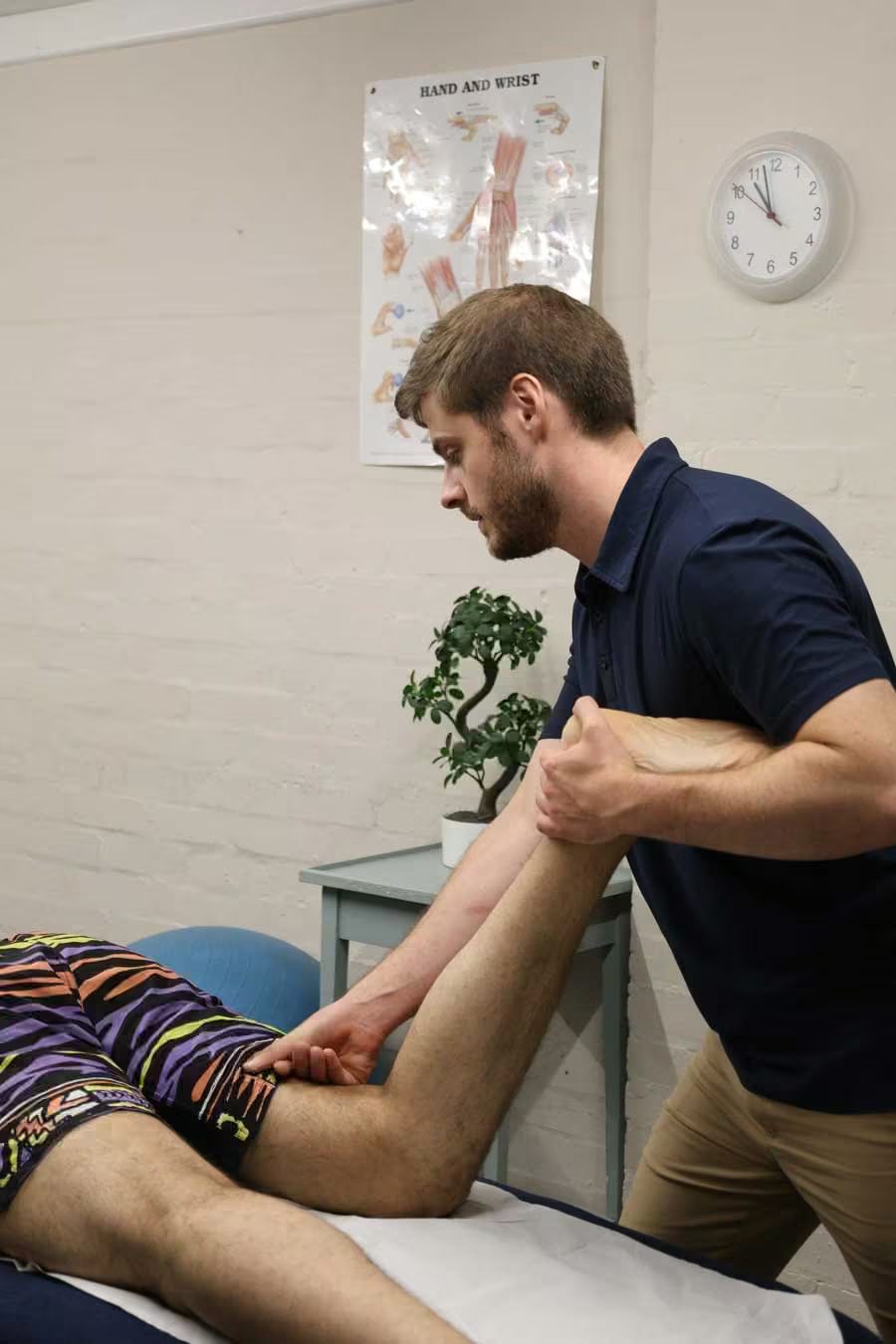
Manual therapy—including soft tissue work to the calf, foot, and fascia, and joint mobilisation where needed—can reduce pain and improve movement in the short term. We may also use rigid or elastic taping techniques, which the 2023 AOPT/AASPT clinical practice guidelines recommend for short-term (one-week) pain relief when used alongside other treatments. Manual therapy is not a standalone fix—it prepares your tissues for the next step: progressive loading.
Building Long-Term Strength
Outcome: rebuilt tolerance in the fascia and calf, so you can return to walking, running, or standing without pain.
Exercise is the foundation of plantar fasciitis treatment. Current evidence supports two stretching approaches as first-line interventions: plantar fascia-specific stretching (rolling your toes back to stretch the sole of your foot) and gastrocnemius-soleus (calf) stretching. These are recommended with the highest level of evidence (Level I, Strength of Recommendation A) in the 2023 AOPT/AASPT guidelines.
But there is more that can be done to help than just stretching. A 2015 randomised controlled trial published in the Scandinavian Journal of Medicine & Science in Sports found that at three months, high-load strength training produced a Foot Function Index score 29 points better than stretching alone (95% CI: 6–52, P = 0.016). This means progressive calf strengthening—using exercises like slow, heavy heel raises—produces superior outcomes for most people.
We’ll prescribe a programme of stretching and strength work tailored to your activity level, and help you manage your daily load so your foot has time to adapt. We’ll guide you on footwear, activity modification, and when to progress.
For persistent cases or those with multiple issues, high-level goals requiring support, closer monitoring and adjustment of rehabilitation in cases that may have failed with treatment elsewhere, or those trying to address their whole physical health beyond the foot, we offer Clinical Personal Training package that integrate our full team over 12–16 weeks. This holistic approach addresses not just your plantar fasciitis, but the underlying factors that contributed to it—from movement patterns and strength imbalances to lifestyle factors that influence your recovery capacity.
Advanced Treatment Options
What You Can Start Doing Today
- 1. Avoid walking barefoot on hard floors until your symptoms settle. The 2021 Morrissey et al. best practice guide explicitly recommends avoiding barefoot walking and flat, unsupportive footwear during the active phase of plantar fasciitis. Wear supportive shoes or slippers indoors.
- 2. Start gentle calf stretching twice daily. Stand facing a wall, place one foot behind you with the knee straight, lean forward until you feel a stretch in your calf. Hold 30 seconds, repeat three times per leg. This addresses one of the first-line interventions recommended by current guidelines.
- 3. Track your load. Write down your daily steps, standing time, and pain levels. This helps you identify patterns and understand your current tolerance—essential for managing a condition where pain is delayed by one to three days.
Why Choose Southampton Physio for Plantar Fasciitis?
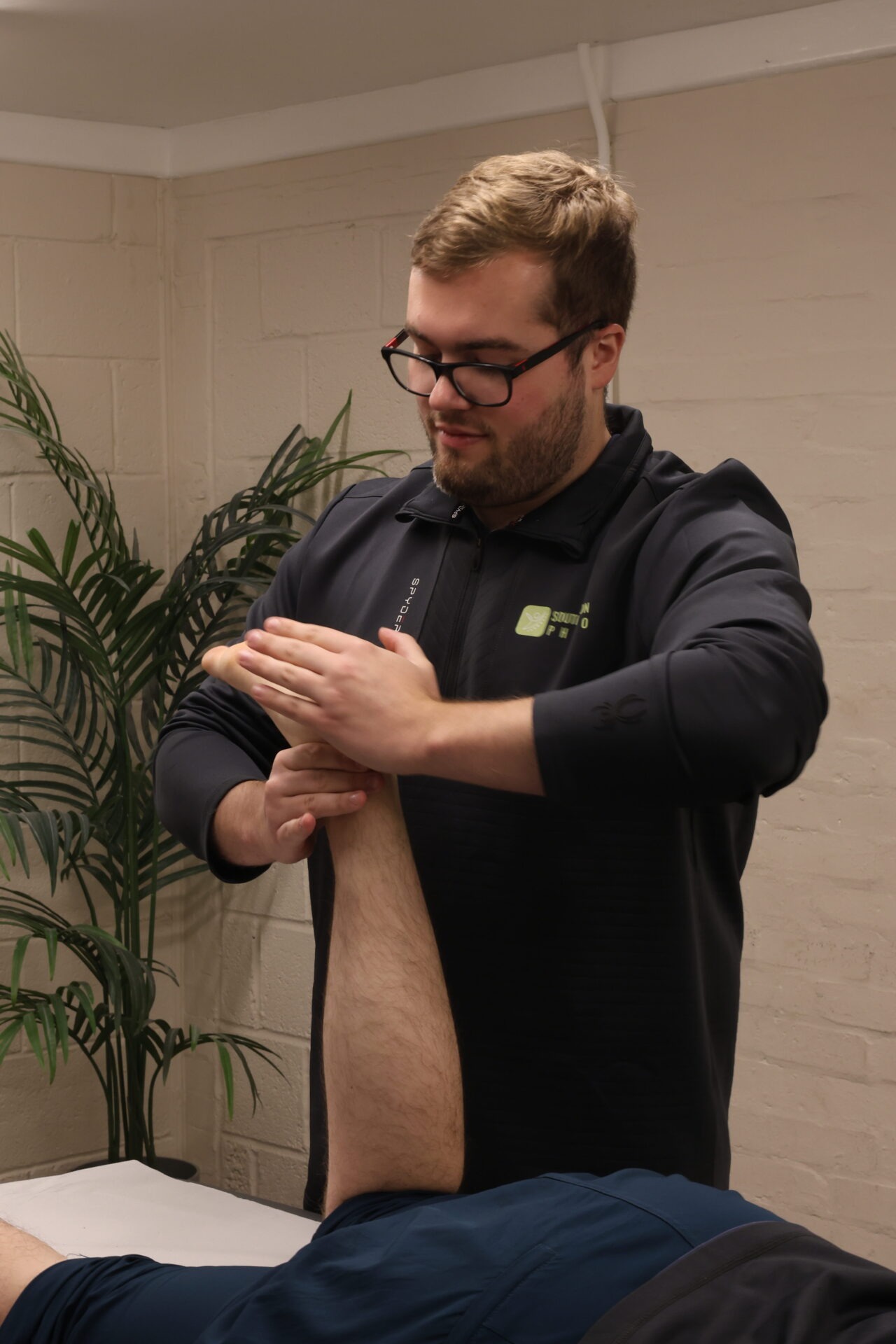
Our team includes physiotherapists, osteopaths, and sports therapists, all working in the same building at 35 Bedford Place. This means if you need a longer-term strength and conditioning pathway after your initial recovery, we can provide it without referring you elsewhere.
We also take the time to explain the “why.” Plantar fasciitis can be frustrating because the pain doesn’t follow a simple pattern—it’s latent, and it responds to what you did days ago, not just today. Once you understand this, you can take control of your recovery.
During your assessment, we don’t just look at your foot in isolation. We assess your whole kinetic chain to identify contributing factors that may be overloading your plantar fascia. This comprehensive approach—combined with our Clinical Personal Training packages for complex cases—means we can address not just your current symptoms, but the underlying patterns that led to them. We can also communicate and collaborate with other medical professionals such as GPs if there are other aspects of your health that require further support.
Frequently Asked Questions About Plantar Fasciitis in Southampton
What is the fastest way to cure plantar fasciitis?
How long does plantar fasciitis take to heal?
What's the worst thing you can do for plantar fasciitis?
Do I need orthotics or insoles for plantar fasciitis?
What is stage 3 plantar fasciitis treatment?
Should I rest completely or keep moving?
Do I need a scan for plantar fasciitis?
What vitamins help plantar fasciitis?
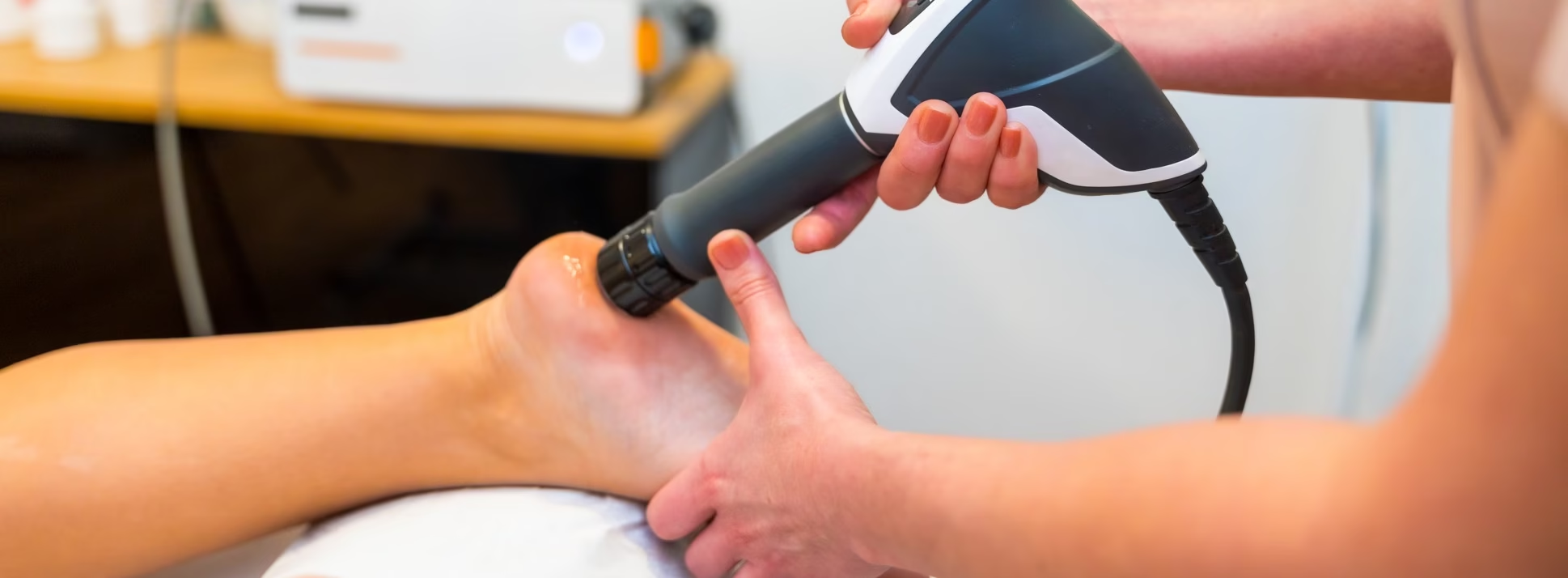
Will shockwave therapy help my plantar fasciitis?
Ready to Get Moving Again?
Plantar fasciitis is one of the most common conditions we treat in Southampton, and we’ve helped many people—runners, office workers, teachers, healthcare professionals—get back to walking, standing, and exercising without that first-step heel pain.
You don’t need to wait for it to resolve on its own. With the right approach—load management, stretching, progressive strengthening, and short-term manual therapy—most people see meaningful improvement within six weeks, and full recovery within 12 months.