GTPS / Gluteal Tendinopathy Treatment in Southampton
That deep, persistent ache on the side of your hip. The way it wakes you when you roll onto it at night, or catches you when you stand from sitting.
Gluteal tendinopathy is a condition affecting the tendons that connect your deep buttock muscles (gluteus medius and minimus) to the hip bone at the greater trochanter, the bony point you can feel on the outer side of your hip. It is a process where the rate of tendon wear becomes faster than the rate of repair, leading to weakened, painful tendons that struggle with load. These are age-related and load-related changes that do not, on their own, predict pain. GTPS (greater trochanteric pain syndrome) is the broader term that describes pain in this area, and in most cases it is the gluteal tendons themselves that are the problem, not the bursa (fluid-filled sac) that was traditionally blamed. At Southampton Physio, we treat gluteal tendinopathy and GTPS using evidence-based rehabilitation that focuses on rebuilding tendon capacity through education, load modification, and progressive exercise.
The condition accounts for 10 to 20% of patients presenting with hip pain to primary care (First point of contact eg. your GP), with an incidence of 1.8 patients per 1000 per year (Grimaldi et al., 2024, Rheumatology Advances in Practice). It is most common in women aged 40 to 60, and is often linked to changes in activity, hormonal factors, or a pattern of overload that the tendon has not been prepared for.
Is This What You're Feeling?
You might recognise some or all of these:
- Pain on the outer side of your hip, often a deep ache that can spread down the outside of your thigh, sometimes as far as the knee. It is not sharp like a nerve issue, but it is persistent and hard to ignore.
- Worse when lying on that side. Sleeping becomes difficult. You wake when you roll over, or you have learned to avoid lying on the painful side altogether. Pillows between your knees help, but they do not solve it.
- Aggravated by walking, stairs, or standing on one leg. Putting your shoes on, getting in and out of the car, or standing while cooking can all trigger pain. Activities that involve crossing your legs or sitting with your knees together often make it worse.
- Stiffness after sitting. The first few steps after getting up from a chair or the car feel uncomfortable. The pain eases slightly as you move, but it does not fully go away.
- Weakness or a sense that your hip is not supporting you properly. You might notice you are limping slightly, or that your hip feels unstable when you walk or climb stairs.
Why Is This Happening?
Gluteal tendinopathy develops when the load placed on the gluteal tendons consistently exceeds their capacity to adapt. The gluteus medius and minimus tendons stabilise your pelvis when you walk, run, climb stairs, or stand on one leg. When these tendons are repeatedly compressed or stretched beyond what they can tolerate, they begin to change structure. They weaken, become painful, and lose their ability to tolerate normal loads.
This often builds up when:
- You have increased activity suddenly: a new walking routine, more time on your feet, or returning to exercise after a break. Tendons adapt slowly, and if the increase in load outpaces their capacity, symptoms develop.
- You spend a lot of time in compressive positions: sitting with your legs crossed, standing with your weight shifted onto one hip, or sleeping on your side without support all compress the gluteal tendons against the greater trochanter. Over time, this repeated compression irritates the tendon.
- Your hip control and strength are not matching the demands you are placing on them. If the muscles around your hip are not conditioning properly, or if movement patterns have shifted to protect another area (such as your lower back or knee), the gluteal tendons take on more load than they should. This is common in people with a history of back pain or knee issues.
- Hormonal changes reduce tendon resilience. Research is emerging on the link between oestrogen decline and tendon health, particularly in postmenopausal women. Grimaldi et al. (2024) in Rheumatology Advances in Practice note that sublingual hormone therapy produced significantly better outcomes compared with placebo in one study, suggesting that transdermal hormone therapy may benefit individuals with gluteal tendinopathy, though further investigation is needed.
- You have had a corticosteroid injection in the past. While injections can reduce pain in the short term, they do not address the underlying tendon problem, and in some cases they can weaken the tendon further. A study synthesis published in 2018 found that although corticosteroid injection induces a reduction in pain and inflammation, it has adverse effects ranging from a deficit in the strength of the injured tendon to atrophy or rupture.
- It is also worth noting that there is often crossover with lower back pain. Sometimes lateral hip pain is a referral pattern from the back, and sometimes both issues occur together. Good assessment determines this and influences the best management of the issue.
How Southampton Physio Treats GTPS and Gluteal Tendinopathy
Your First Assessment: Understanding What's Driving Your Hip Pain
We identify the load patterns and movement habits that are overloading your tendon, and build a clear plan to change them.
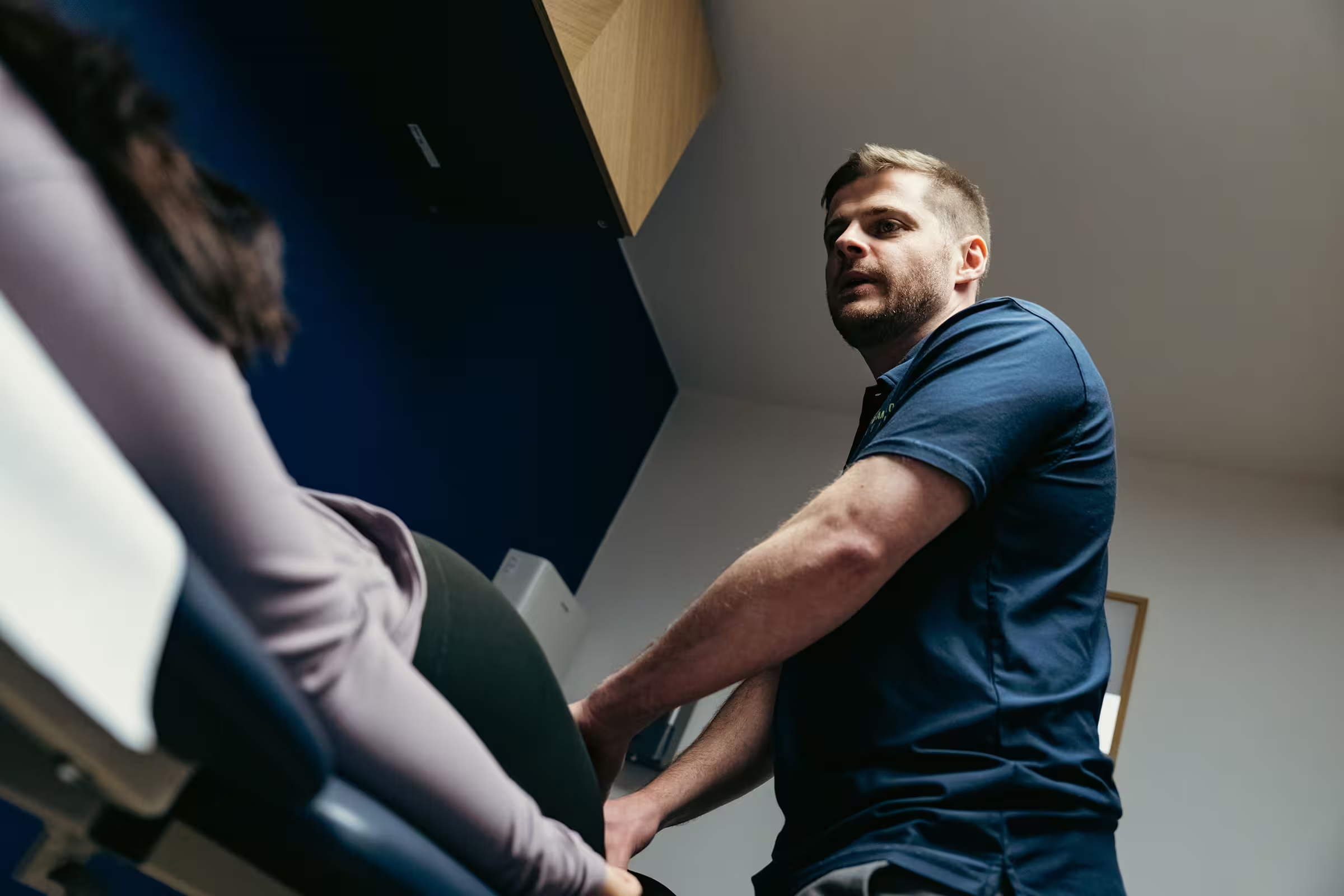
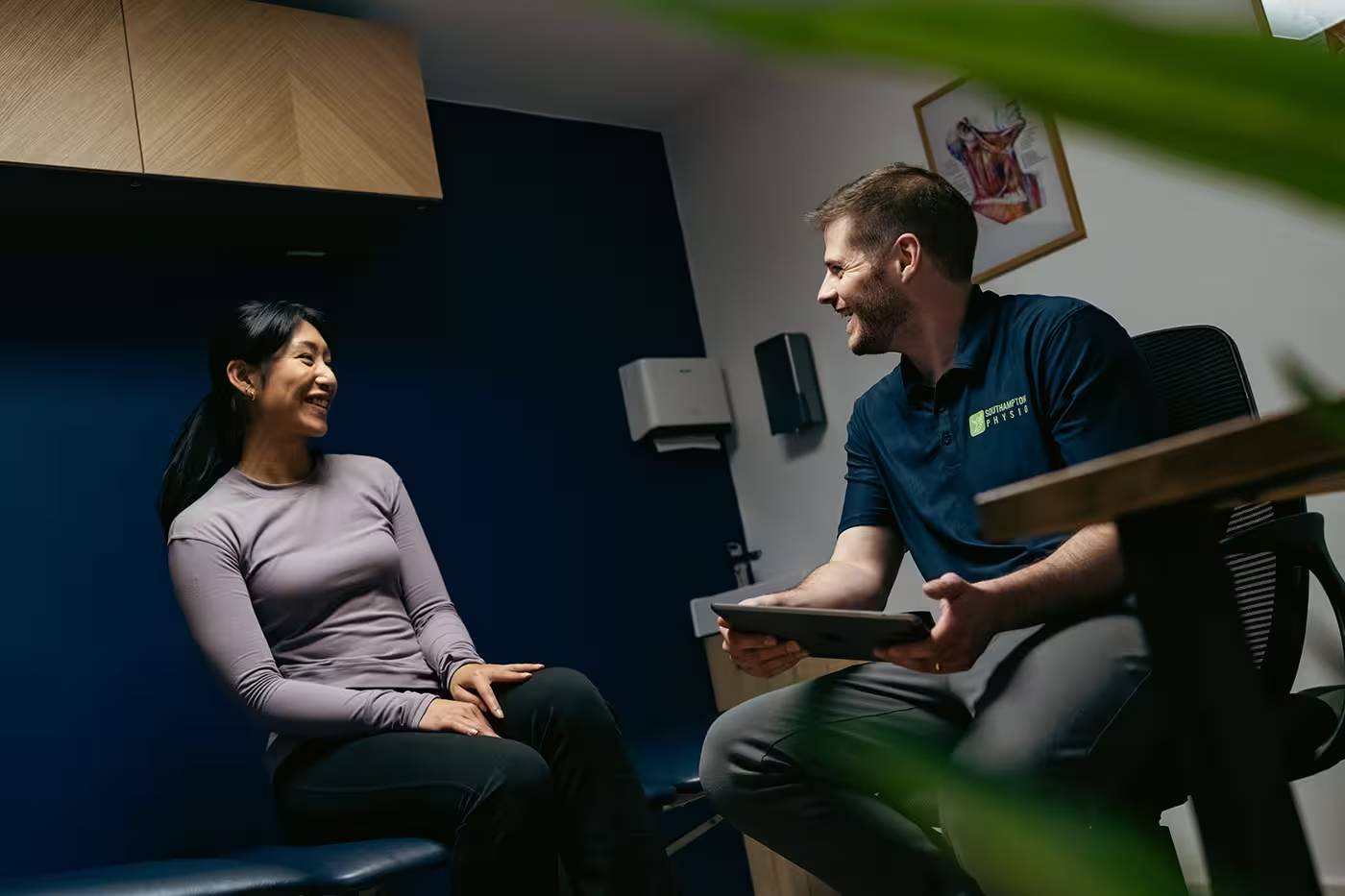
In your first session we will ask about your pain pattern, your daily routine, how you sleep, what aggravates it, and what you have already tried. Then we assess your hip strength, control, and movement quality, not just at the hip itself, but also how your back, pelvis, and knee are functioning. Sometimes the issue is purely local. Sometimes there is a broader pattern that needs addressing.
We will also assess whether this is truly a tendon issue or whether there is a component of referred pain from your lower back. That distinction matters, because it changes how we manage the problem.
By the end of the first session, you will understand what is happening, why it has happened, and what needs to change. You will leave with a clear explanation, initial advice on load modification, and usually one or two exercises to start rebuilding capacity.
Hands-On Treatment: Reducing Sensitivity and Preparing the Tendon for Loading
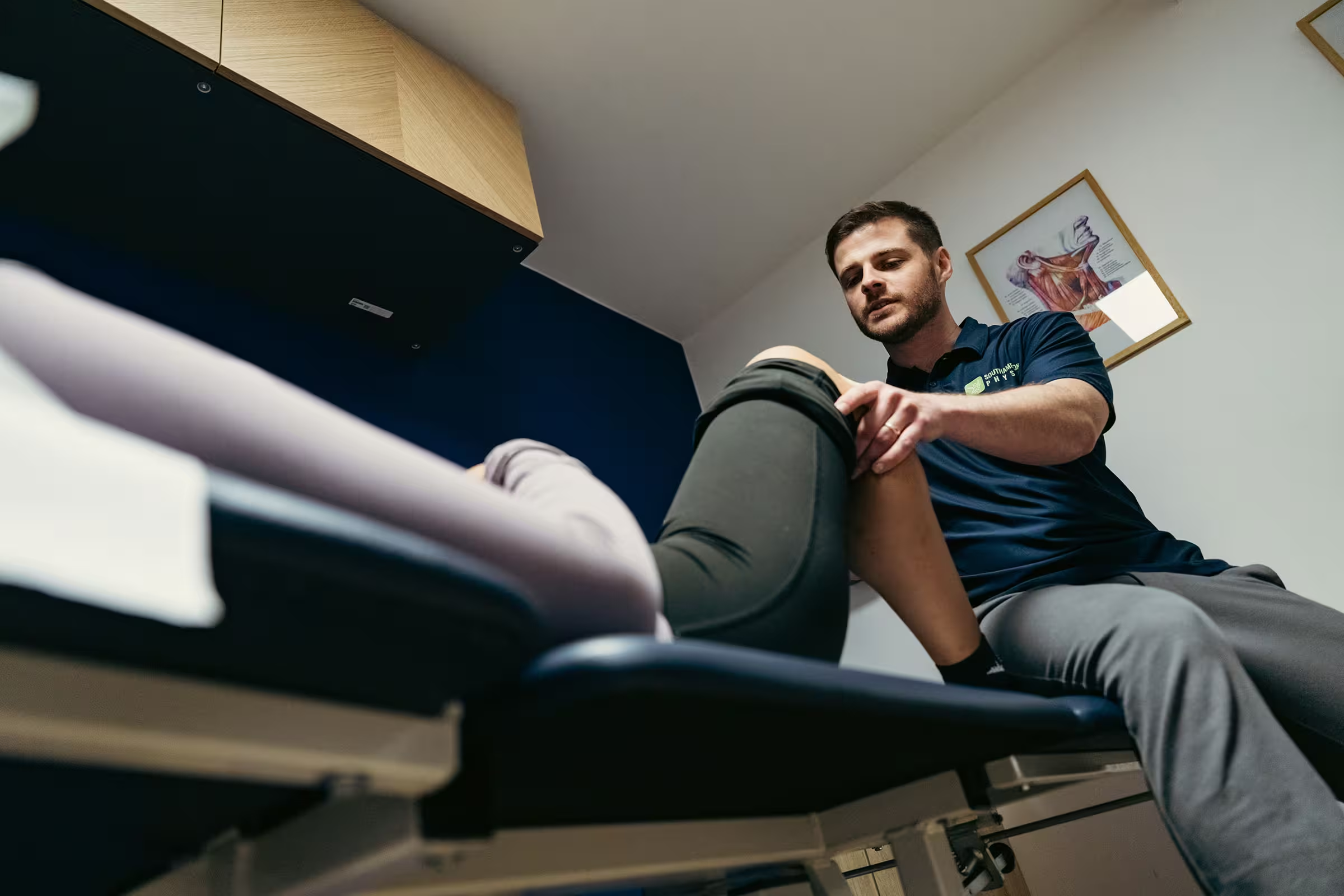
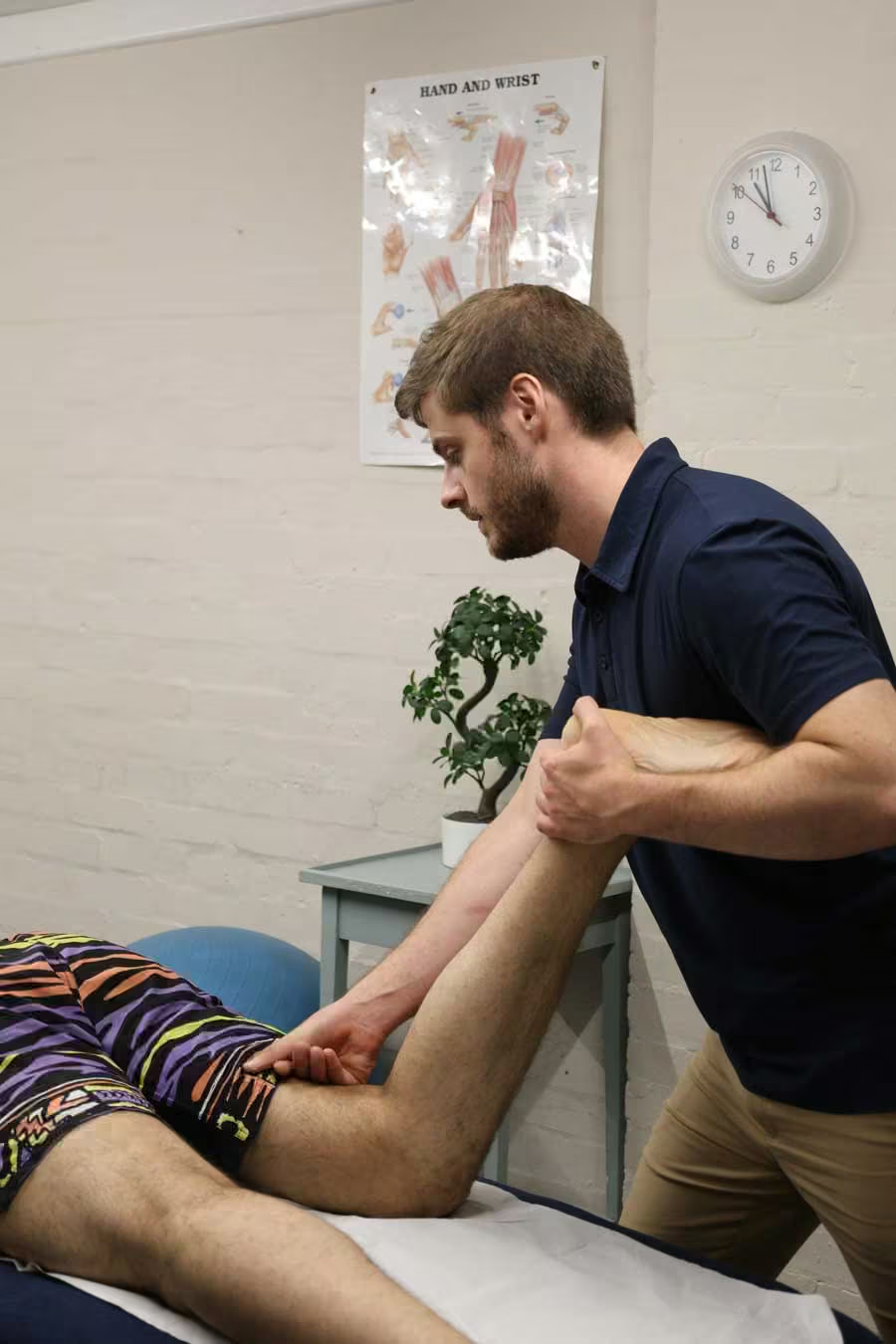
Manual therapy can help to settle irritated tissues and improve your tolerance for movement, but it is not the fix on its own. We use hands-on techniques where appropriate and helpful to reduce pain, improve local blood flow, and help you move more comfortably. This can be particularly useful in the early stages when the tendon is highly sensitive, or when surrounding muscles are compensating and becoming overactive, as a barrier to engaging in the rehabilitation that gives you the long term improvements.
Manual therapy is an adjunct. It can helpo to prepare the tendon and the surrounding structures for exercise rehab, but it does not create the long-term adaptation you need. That comes from progressive loading.
If appropriate, we may also use radial shockwave therapy. NICE acknowledges that shockwave therapy has some promising results for GTPS, though due to a paucity of research evidence currently, it would be considered and offered in the right circumstances as part of a broader treatment plan (NICE Clinical Knowledge Summaries, 2024). Radial shockwave can help reduce tendon pain and improve tolerance for loading, and we use it as an adjunct to exercise therapy, not as a standalone treatment. You can read more about our shockwave therapy service.
Building Long-Term Strength: Rebuilding Tendon Capacity and Hip Control
Exercise is the foundation of recovery. We progressively load the tendon so it adapts, strengthens, and tolerates normal activity again.
The landmark LEAP trial, published in the BMJ in 2018 (Mellor et al.), found that education and exercise was superior to both corticosteroid injection and a wait-and-see approach. At 8 weeks, 78.6% of patients in the education and exercise group reported successful outcomes, compared with 58.5% in the corticosteroid group and 51.9% in the wait-and-see group. At 52 weeks, the education and exercise group had less frequent pain and greater clinically important pain reduction. This is the gold-standard evidence, and it is what current NHS and NICE guidelines recommend as first-line treatment.
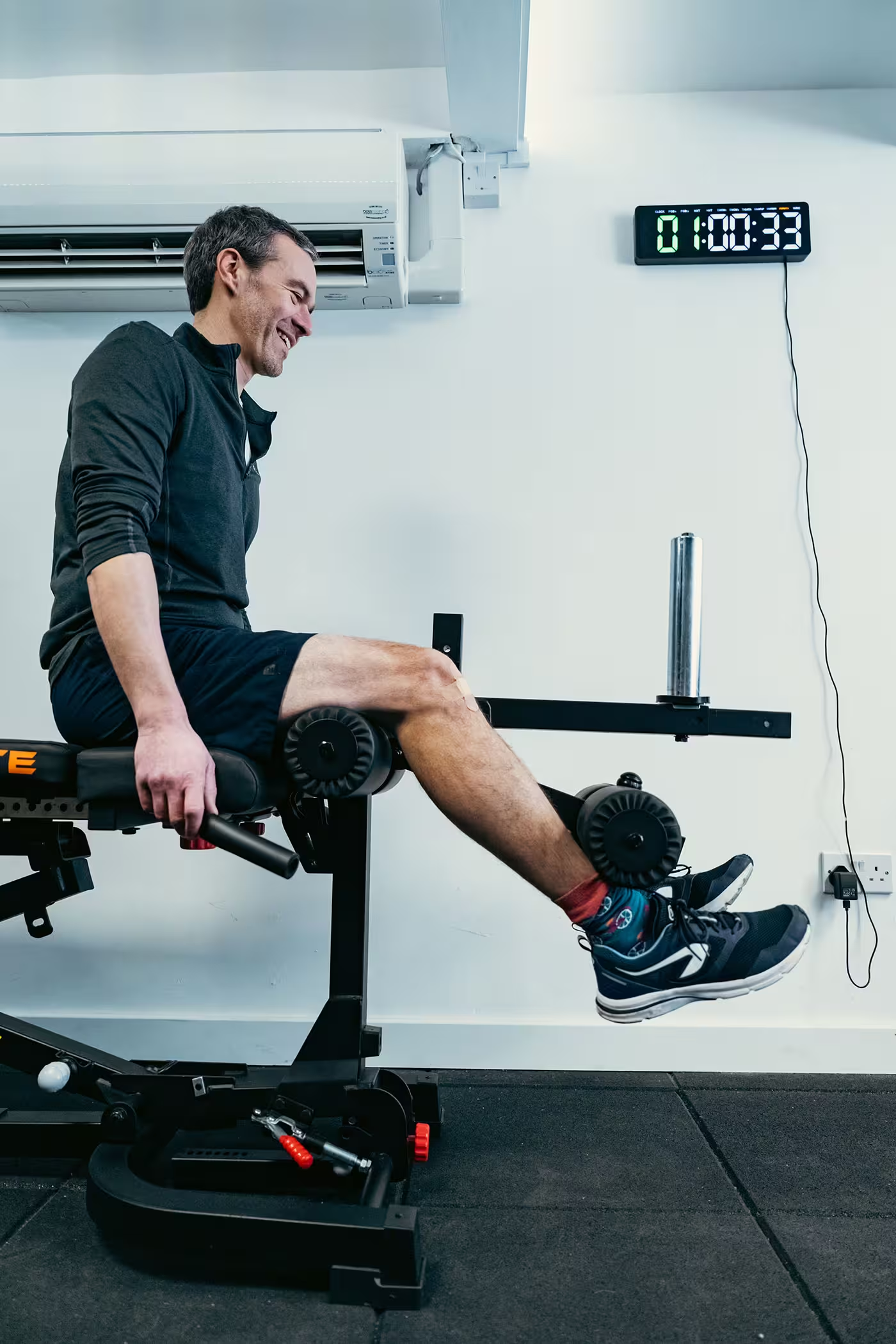
We start with exercises that the tendon can tolerate, often isometric holds (muscle contraction without movement) that build strength without excessive compression or stretch. As your tolerance improves, we progress to isotonic exercises (controlled movement under load), then functional loading that mirrors the demands of your daily life or sport.
But it is not just about getting strong. Assessment helps us understand control, conditioning, and support from different muscles around the hip. Recognising the different roles of different muscles, and how to target them, can be the difference between progress and plateau. We tailor the programme to your movement patterns, your goals, and your lifestyle.
Education is a key component. Doing the right exercises is helpful, but only if the pain is understood and respected in daily life. We guide you through load modification: how to adjust your sitting posture, sleeping position, and daily activities to reduce compressive load on the tendon. This includes avoiding positions like crossing your legs, sitting with your knees together, or standing with your weight shifted onto one hip. These positions increase compressive load on the gluteal tendons and are aggravating factors (Almousa et al., 2024, HRB Open Research).
All movement is load. Recognising and respecting recovery times from both exercise and daily physical stresses is key to success. You will learn how to pace your activity so you are loading the tendon enough to stimulate adaptation, but not so much that you repeatedly flare it up.
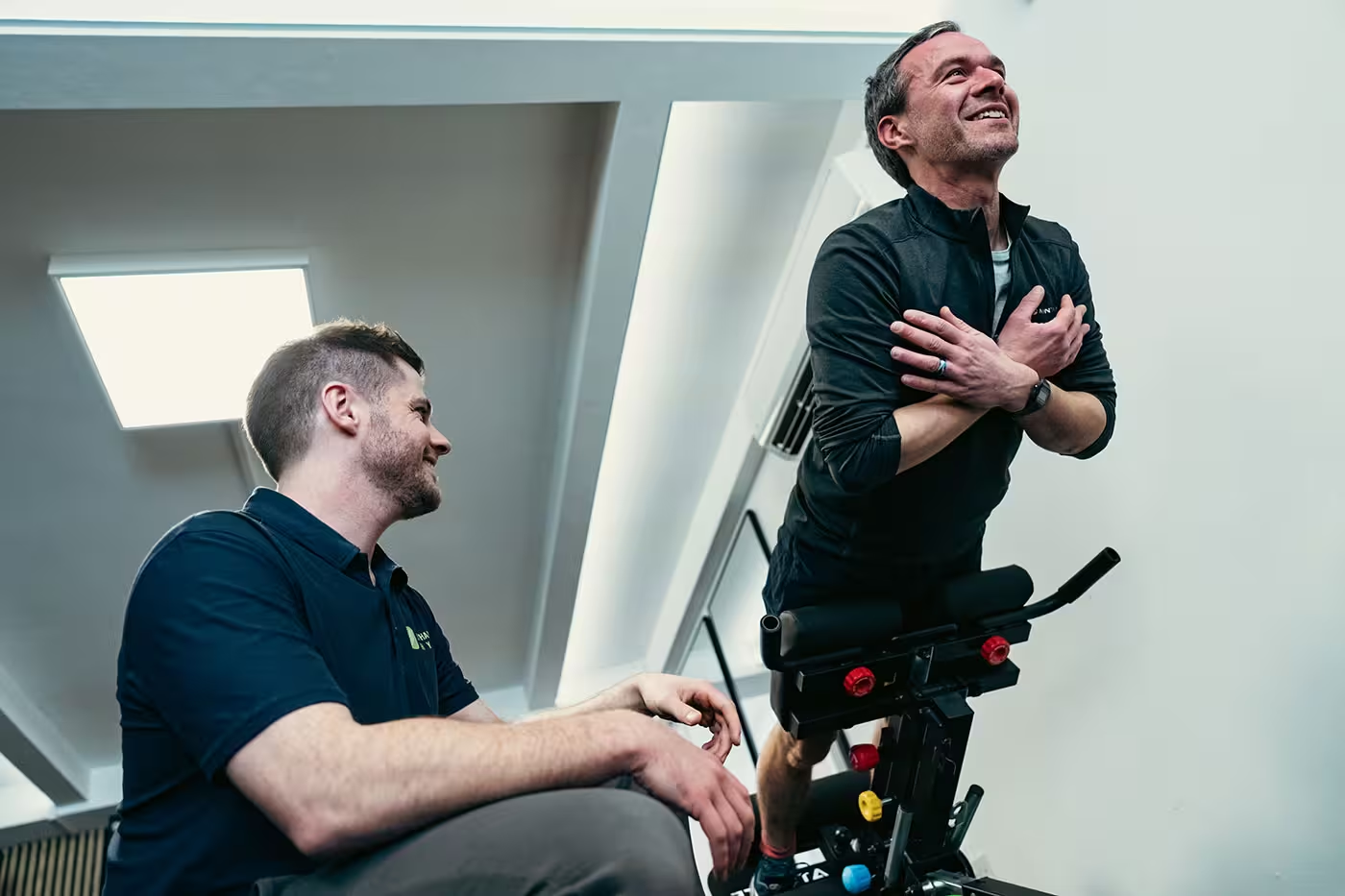
For some people, especially those who have tried multiple treatments without lasting results or have multiple issues alongside GTPS, we offer a more comprehensive pathway that integrates therapy with gym based rehabilitation over 12 weeks through our Clinical Personal Training programme. This is designed for persistent or complex issues that need a deeper root-cause approach, blending physiotherapy, sports therapy and/or osteopathy, with strength training, and lifestyle coaching.
What You Can Start Doing Today
- 1. Modify how you sleep. If lying on your painful side wakes you, try sleeping on your back or on the opposite side with a pillow between your knees. This reduces compression on the gluteal tendons overnight. Avoid lying directly on the affected hip until symptoms settle.
- 2. Avoid compressive positions during the day. Stop crossing your legs when you sit. Avoid sitting with your knees close together or standing with your weight shifted onto one hip. These positions compress the gluteal tendons and slow recovery. Sit with your feet hip-width apart and your weight evenly distributed.
- 3. Reduce aggravating activities temporarily, but do not stop moving altogether. If walking long distances, climbing lots of stairs, or standing for extended periods flares your pain, reduce the volume temporarily, but do not stop moving. Passive rest does not address the underlying tendon problem and is not recommended by current guidelines (Grimaldi et al., 2024). Instead, find a level of activity you can tolerate and build from there.
How Long Does Recovery Take?
Recovery from gluteal tendinopathy typically takes 6 to 12 months with appropriate treatment, though this depends on the severity and how long the issue has been present (NHS Inform, 2024). It is normal to have flare-ups during this time. Tendons do not adapt in a straight line.
The LEAP trial showed significant improvement at 8 weeks, with sustained benefits at 52 weeks. In one study, 60.5% of patients reported symptom resolution at 15 months (PMC Narrative Review, 2025). Most cases resolve with conservative measures, with success rates over 90% (narrative synthesis, 2025).
Early diagnosis and management improve prognosis. Delay and mismanagement can worsen outcomes due to progression to recalcitrant symptoms (BJGP, 2017). If you have had symptoms for several months and have not yet had a structured rehabilitation programme, starting now gives you the best chance of full recovery.
Patience is essential. Like all tendons, it can take time to see changes, and guidance with a therapist helps assure that changes are occurring in function and things are moving in the right direction, even if you cannot feel the improvements just yet.
Why Choose Southampton Physio for GTPS and Gluteal Tendinopathy Treatment?
We base our treatment on the current evidence. That means education and progressive exercise as the foundation, with manual therapy and shockwave as adjuncts where appropriate, not the other way around. We follow the NICE guidelines and align with research findings into rehabilitation, such as the LEAP trial, and we tailor the programme to your life, your goals, and your movement patterns.
Our team has extensive experience treating persistent hip pain, including gluteal tendinopathy. Richard Beak is a physiotherapist and England Athletics certified coach who works extensively with runners and athletes dealing with lower limb tendon issues. Ewan Gadsby is a sports therapist with a particular focus on hip and lower limb rehabilitation.
We can also integrate Pilates and movement-based rehabilitation where beneficial, with Andy Killen and Seana Couch, physiotherapists and Pilates instructors, for those who benefit from a longer-term, supervised exercise pathway.
We are based at 35 Bedford Place, Southampton, SO15 2DG, a short walk from Southampton Central station and easily accessible from Shirley, Portswood, Woolston, and Ocean Village.
Bernie Smith said: “Ian’s expertise in rehabilitating injury was why I went to him but it was really important to me to find someone supportive with a flexible approach – that is exactly what I have found. Repeated problems with my back and ongoing pain in my hip for 18 months before I met Ian was inhibiting me from exercising and even moving because I was worried about hurting myself again. We have worked together for about ten months face to face and on zoom. In that time he has helped me better identify the ‘pain’ I was feeling when I moved and recognise when it wasn’t going to cause injury. It would have been really hard for me to do that on my own. I’m definitely stronger and am back to moving without worrying I’ll injure myself.”
You can see what others have said about us on our success stories page.
Frequently Asked Questions About GTPS and Gluteal Tendinopathy in Southampton
Is GTPS the same as gluteal tendinopathy?
How long does GTPS recovery take?
Does GTPS ever go away completely?
What sleeping position is best for GTPS?
Is physiotherapy effective for GTPS?
Can you exercise with GTPS?
What exercises should I avoid with GTPS?
Is GTPS caused by low oestrogen?
How do you repair gluteal tendinopathy?
Will I ever recover from gluteal tendinopathy?
Do I need a scan for GTPS?
How many sessions will I need?
Is a corticosteroid injection helpful for GTPS?
Ready to Get Moving Again?
If you have been struggling with persistent hip pain that is affecting your sleep, your walking, or your ability to stay active, you do not need to keep managing it on your own. Gluteal tendinopathy responds well to structured rehabilitation, but it takes time, consistency, and the right approach. We will work with you to understand what is driving your symptoms, modify the loads that are aggravating your tendon, and rebuild your capacity gradually so you can return to the activities that matter to you.
You can book your GTPS assessment online, or call us on 023 8110 2077 if you would like to speak to someone first. We are here Monday to Saturday at our central Southampton clinic.