
Ankle Sprain Treatment in Southampton
That sudden sharp twist. The immediate swelling. The frustration of not knowing whether you can walk on it, or whether you should have gone straight to A&E.
An ankle sprain is an injury to the ligaments that support the ankle joint, most commonly occurring when the foot is forced into an inward and downward position — usually during a slip, an awkward landing, or a change of direction. The lateral ligament complex on the outside of the ankle is involved in around 85% of cases, with the anterior talofibular ligament (ATFL) most frequently affected. Ankle sprains account for a significant proportion of musculoskeletal injuries presenting to emergency departments in the UK, with research showing an incidence rate of 52.7 per 10,000 population in the West Midlands. At Southampton Physio, we assess ankle sprains thoroughly to determine the extent of ligament damage, restore stability and movement, and help you return to walking, running, or sport with confidence — not just wait and hope it gets better.
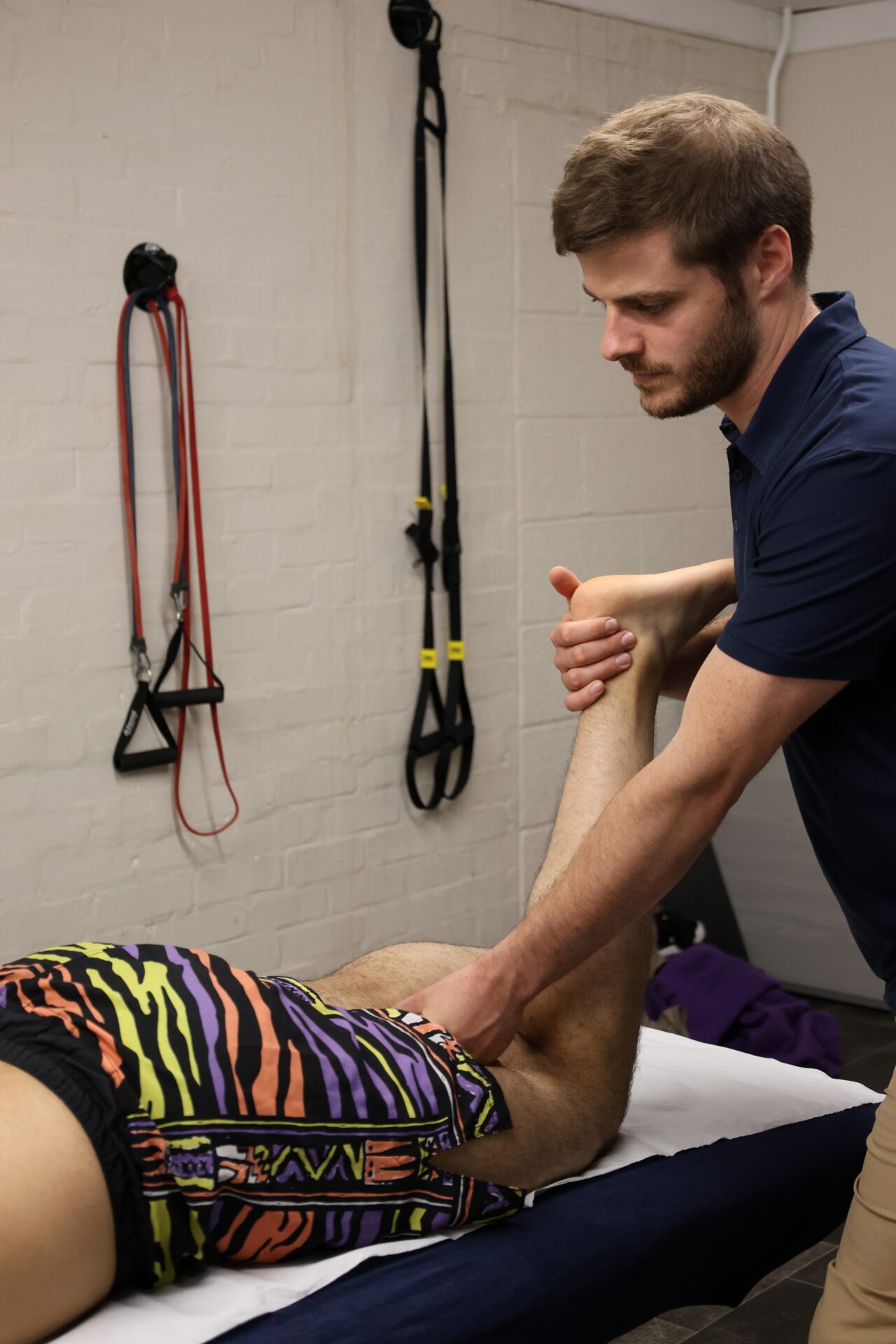
Is This What You're Feeling?
- Sharp pain on the outside of the ankle at the moment of injury, sometimes accompanied by a tearing or popping sensation
- Rapid swelling that develops within minutes to hours, often making it difficult to put shoes on
- Bruising appearing around the ankle and foot, which may track down towards the toes over the following days
- Difficulty weight-bearing — you might manage a few steps with a limp, or you might not be able to put any weight through the foot at all
- Instability or a feeling that the ankle might give way when you try to walk or stand
Why Is This Happening?
- Sports involving cutting, jumping, or rapid direction changes — football, netball, basketball, tennis
- Running or walking on uneven ground — trails, beaches, poorly maintained pavements
- Stepping off a kerb awkwardly or missing a step on stairs
- Landing from a jump with the foot in a vulnerable position
What determines whether you sprain your ankle isn’t just bad luck. Research shows that previous ankle sprains significantly increase your risk of re-injury — a study published in the Journal of Orthopaedic & Sports Physical Therapy (Martin et al., 2021) found that 40% of people develop chronic ankle instability (CAI) after their first lateral ankle sprain. This happens because the ligaments heal with some permanent laxity, and more importantly, the proprioceptive sensors in the ankle — your joint position sense, the sensors that tell your brain where your foot is in space — are damaged. Without structured rehabilitation, your ankle loses some of its ability to react quickly to unstable surfaces, and you’re more likely to roll it again.
Think of it like this: your ankle once had a combination of passive stability (ligament strength) and active stability (muscular control and proprioception). After a sprain, you may lose some of that passive stability permanently. The ligament might heal, but it won’t be quite as tight as it was. To compensate, you need to build more active stability — stronger muscles, better balance, faster reactions. Your ankle becomes like a city building its defences: when one wall is damaged, the other defences must step up to maintain the fortress. That’s what rehabilitation does.
Like a key that unlocks multiple levels of security, proper rehabilitation addresses each layer of your ankle’s defence system. The first lock — your ligaments — may be looser after injury, but the second lock — your muscles — and third lock — your proprioception — can be made stronger and more responsive than ever before.
Other contributing factors include:
- Poor ankle mobility — if your ankle can't move through its full range, it's more likely to reach an extreme position suddenly
- Weak or poorly coordinated ankle and calf muscles — these muscles act like a suspension system, absorbing shocks and maintaining control
- Fatigue — coordination and reaction time drop when you're tired, especially late in a match or training session
- Inadequate footwear — worn-out trainers or inappropriate shoes for the activity
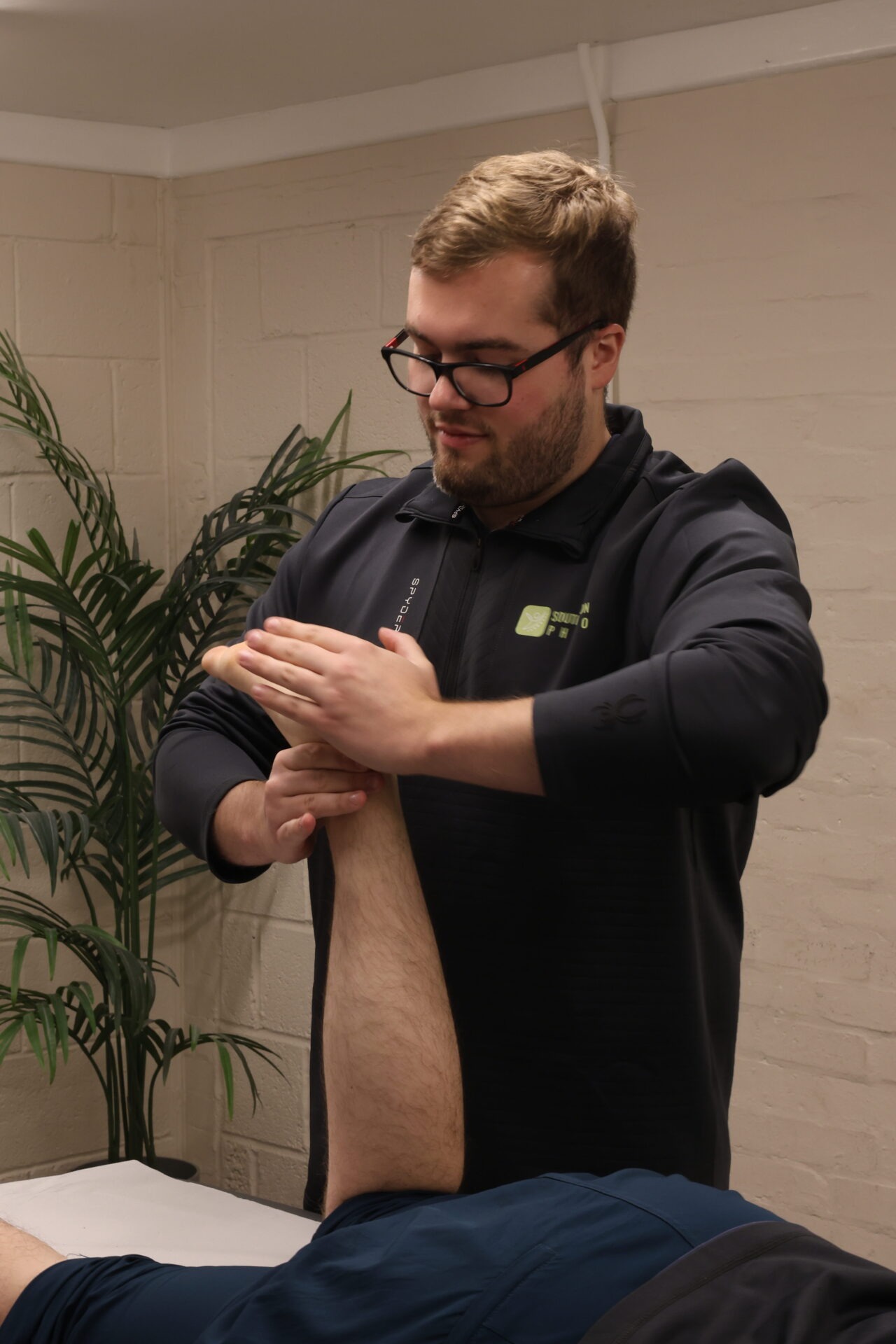
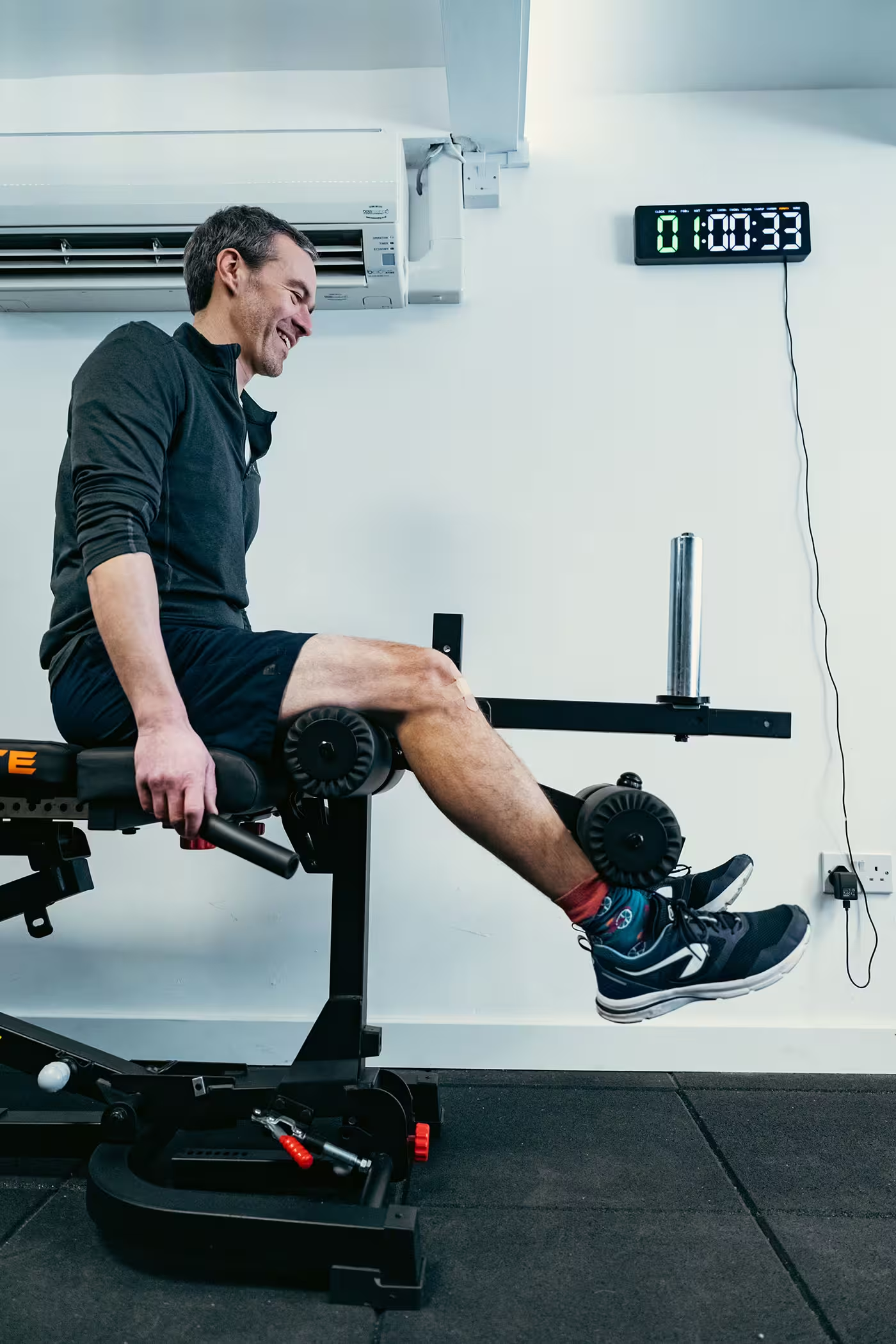
How Southampton Physio Treats Ankle Sprains
Treatment depends on the severity of the sprain (Grade I–III), how long ago it happened, and what you need to get back to. But the core principle is the same: early mobilisation and progressive loading are more effective than prolonged rest or immobilisation.
The 2021 APTA/JOSPT Clinical Practice Guideline (Martin et al., 2021) gives a Strong recommendation (Moderate evidence) for early mobilisation approaches rather than immobilisation for acute lateral ankle sprains. Research consistently shows that people who start moving early recover faster and have better long-term outcomes.
Your First Assessment — Understanding What You're Dealing With
Outcome: A clear diagnosis, a realistic timeline, and a plan that makes sense for your life and goals.
We start by taking a detailed history: how the injury happened, what you felt and heard, how it’s behaved since, and what you’ve tried so far. Many people come to us after waiting weeks for it to “just get better,” or after re-injuring it by going back to sport too soon. Others have been to A&E, been told “it’s just a sprain,” handed a leaflet with alphabet exercises, and sent away with no clear idea of what to do next.
We then assess:
- Swelling and bruising distribution — this tells us which structures are involved
- Range of movement — both at the main ankle joint (talocrural) and the joint beneath (subtalar). Loss of movement in either can limit function and increase re-injury risk
- Ligament integrity — specific stress tests to determine which ligaments are damaged and to what degree
- Proprioception and balance — can you stand on one leg with your eyes closed? How well does your ankle react to small wobbles?
- Strength — calf strength, ankle eversion and inversion strength, and how well you can control your foot position during movement
- Functional movement — can you hop? Can you change direction? Can you go up on tiptoes?
Hands-On Treatment — Reducing Pain and Restoring Movement
Outcome: Less pain, less swelling, and improved ankle mobility so you can start loading it properly.
Manual therapy isn’t the fix for an ankle sprain — exercise is — but it can help in the early and mid-stages of recovery. The 2021 APTA/JOSPT guideline gives a Moderate recommendation (Low evidence) for manual therapy directed at the leg, ankle, and foot to reduce pain and improve function.
We use:
- Joint mobilisations to restore normal movement at the ankle and foot joints — particularly if stiffness is limiting your ability to walk normally or preventing you from progressing with exercises
- Soft tissue techniques to address muscle tightness and improve circulation around the injured area
- Taping or bracing in the early stages if needed for symptom relief and confidence, but we don't keep you in a brace long-term — research shows prolonged immobilisation delays recovery
The goal is always to prepare the tissues for the next stage: loading them progressively through exercise.
A systematic review and meta-analysis published in the Journal of Orthopaedic Surgery and Research (2025) analysed ten randomised controlled trials (n=565) and found that physiotherapy produced significantly lower pain scores compared to conventional treatment (standard care approaches such as basic advice, simple exercises, or pain medication alone without structured rehabilitation) with a weighted mean difference = -0.46, 95% CI = -0.90 to -0.01, P = 0.04. The effect size is modest, but for many people, even a small reduction in pain early on makes a meaningful difference to adherence and confidence.
Building Long-Term Strength — The Foundation of Recovery
Outcome: Restored ankle stability, reduced re-injury risk, and the confidence to return to the activities you care about.
This is where the real work happens. The 2021 APTA/JOSPT guideline gives a Strong recommendation (High evidence) for therapeutic exercise, including range of motion, stretching, strengthening, neuromuscular control, and balance training.
Your rehabilitation programme will progress through phases:
- Gentle range-of-movement exercises — ankle pumps, circles, alphabet drawing with your foot
- Early weight-bearing as tolerated — research shows that bearing weight early (even if it's uncomfortable) speeds recovery
- Isometric strengthening — activating the muscles around the ankle without moving the joint
- Swelling control — elevation, compression, and movement (not prolonged icing, which evidence suggests has limited benefit)
Phase 2: Restoring strength and control (weeks 2–6)
- Progressive resistance exercises — using resistance bands to strengthen the muscles that protect the ankle (calf, peroneals, tibialis anterior)
- Balance and proprioception training — single-leg standing progressing to unstable surfaces, eyes open then eyes closed
- Functional movement retraining — step-ups, lunges, controlled hopping
Phase 3: Return to activity (weeks 6–12, depending on severity and goals)
- Sport-specific or activity-specific training — cutting drills for football, trail running if that's your goal, plyometric exercises for jumping sports
- Reactive balance and perturbation training — preparing the ankle to respond to unexpected challenges
- Graded return to full activity — building volume and intensity progressively
The guideline gives a Strong recommendation (Moderate evidence) for functional training that replicates the demands of your desired activities. Just because you can walk without pain doesn’t mean you’re ready to play football. Walking is not running. Running is not cutting or changing direction. We assess your readiness for each stage and progress you safely.
For some people — especially those who’ve had multiple ankle sprains, or those returning to high-level sport — we offer a more comprehensive pathway through our Clinical Personal Training. This integrates our full team over 12–16 weeks and is designed for complex or recurrent issues that need a deeper, root-cause approach.
What You Can Start Doing Today
1. Use the PEACE & LOVE framework, not RICE
- Protection: Avoid activities that increase pain in the first few days, but don't immobilise completely
- Elevation: Raise the ankle above heart level when resting
- Avoid anti-inflammatories: Unless prescribed by a doctor for pain relief, early use may impair tissue healing
- Compression: A tubigrip or compression bandage may help with swelling, but don't rely on it alone
- Education: Understand that active recovery is better than passive rest
- Load: Start progressive weight-bearing and movement as tolerated — low level pain is not a sign of harm at this stage, but high levels of pain should still be a sign to back-off
- Optimism: Be confident about recovery — pessimistic beliefs about pain are linked to slower recovery
- Vascularisation: Gentle cardiovascular activity (e.g., walking, cycling if tolerable) promotes blood flow and healing
- Exercise: Structured rehabilitation significantly reduces re-injury risk
2. Start weight-bearing as soon as you can tolerate it
3. Move the ankle regularly
4. Don't wait weeks before seeking help
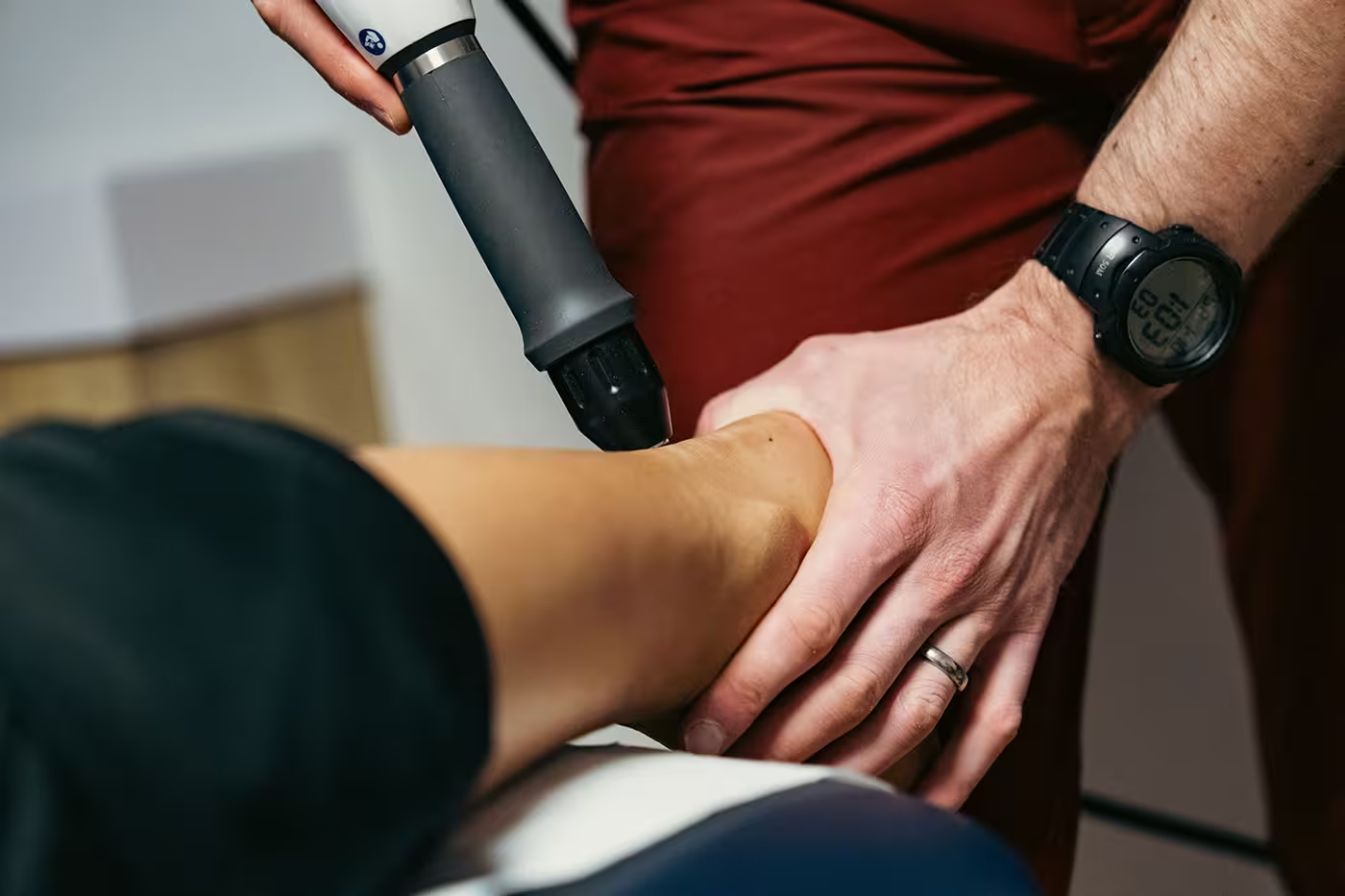
How Long Does Recovery Take?
Grade I sprain (mild — ligament stretched but not torn):
- Tissue healing: 2–4 weeks
- Return to walking normally: 1–2 weeks
- Return to sport or high-impact activity: 2–3 weeks with appropriate rehabilitation
Grade II sprain (moderate — partial ligament tear):
- Tissue healing: 6–8 weeks
- Return to walking normally: 2–4 weeks
- Return to sport: 4–6 weeks with structured rehabilitation
- Tissue healing: 10–12 weeks
- Return to walking normally: 4–6 weeks
- Return to sport: 8–12 weeks; may require surgical consultation if instability persists
A systematic review in the British Medical Journal noted that most ankle sprains should start to improve within two weeks. If yours hasn’t, that’s a sign to seek professional assessment — NICE Clinical Knowledge Summary (2020) recommends GP referral if there’s no improvement after this timeframe.
But here’s the critical point: just because it feels better doesn’t mean you’re ready to return to activities. Ligamentous tissue takes longer to heal than symptoms take to resolve. If you return to sport or high-impact activity too soon, re-injury risk is high. This is one of the most common mistakes we see — people feel 80% better and assume they’re 100% recovered.
Preventing Chronic Ankle Instability — Why
Rehabilitation Matters
40% of people who seek care for a first-time lateral ankle sprain develop chronic ankle instability (Martin et al., 2021, JOSPT). That means recurrent sprains, a persistent feeling of the ankle “giving way,” and reduced confidence in activities.
Chronic ankle instability develops when:
- The injured ligaments heal with some residual laxity
- Proprioceptive deficits persist — the ankle's ability to detect and respond to unstable surfaces is impaired
- Muscle weakness and poor neuromuscular control remain unaddressed
The good news: supervised exercise-based rehabilitation significantly reduces this risk. The 2018 BJSM international consensus emphasised that supervised exercises reduce the risk of recurrent sprains and chronic instability more effectively than self-directed rehabilitation.
This is why we don’t just treat the pain — we restore the ankle’s capacity to handle the demands you place on it. That means:
- Rebuilding strength in the muscles that stabilise the ankle
- Restoring full range of movement at both the ankle and subtalar joints
- Training proprioception and reactive balance so your ankle can respond quickly to unexpected challenges
- Progressing to sport-specific or activity-specific drills that replicate real-world demands
Why Choose Southampton Physio for Ankle Sprain Treatment?
You’ll find plenty of clinics offering ankle sprain treatment, but not all rehabilitation is equal. At Southampton Physio, we combine evidence-based practice with the depth of assessment and hands-on expertise that comes from years of clinical experience.
Richard Beak, our lead physiotherapist, specialises in complex lower limb work and is an England Athletics–qualified coach who brings a performance-focused lens to rehabilitation — particularly for runners and athletes. Our sports therapist, Ewan Gadsby, has experience with a variety of athletes and sports people as well as active populations as a whole.
We also work as a team. If your ankle sprain is complicated by other issues — recurrent injuries, hypermobility, or persistent pain — we integrate our full clinical expertise, including our chronic pain management service and sports massage for soft tissue work.
Here’s what one of our patients said after recovering from a recurrent ankle sprain:
Frequently Asked Questions About Ankle Sprains in Southampton
Do sprained ankles ever fully heal?
How long does an ankle sprain take to heal?
When should I start physiotherapy after an ankle sprain?
Can I walk on a sprained ankle?
What's the difference between a sprain and a fracture?
How can I prevent chronic ankle instability?
Should I wear an ankle brace or support?
Do I need a scan for my ankle sprain?
Can physiotherapy heal an ankle sprain?
What exercises help with ankle sprains?

Ready to Get Your Ankle Assessed and Start
Recovering Properly?
Ankle sprains are common, but that doesn’t mean they’re simple. The difference between a quick recovery and months of frustration often comes down to whether you get the right assessment and rehabilitation early on. If you’re limping around hoping it’ll just sort itself out, or if you’ve already re-injured it once, it’s time to get it looked at properly.
We’ll assess the extent of ligament damage, check for any complications, and design a rehabilitation plan that’s specific to your ankle, your activities, and your goals. Whether you’re an athlete trying to get back to sport, a runner frustrated by recurrent sprains, or someone who just wants to walk without worry, we’ll help you rebuild the stability and confidence you need.
Book your ankle sprain assessment today.
Call us on 023 8110 2077 or book online.